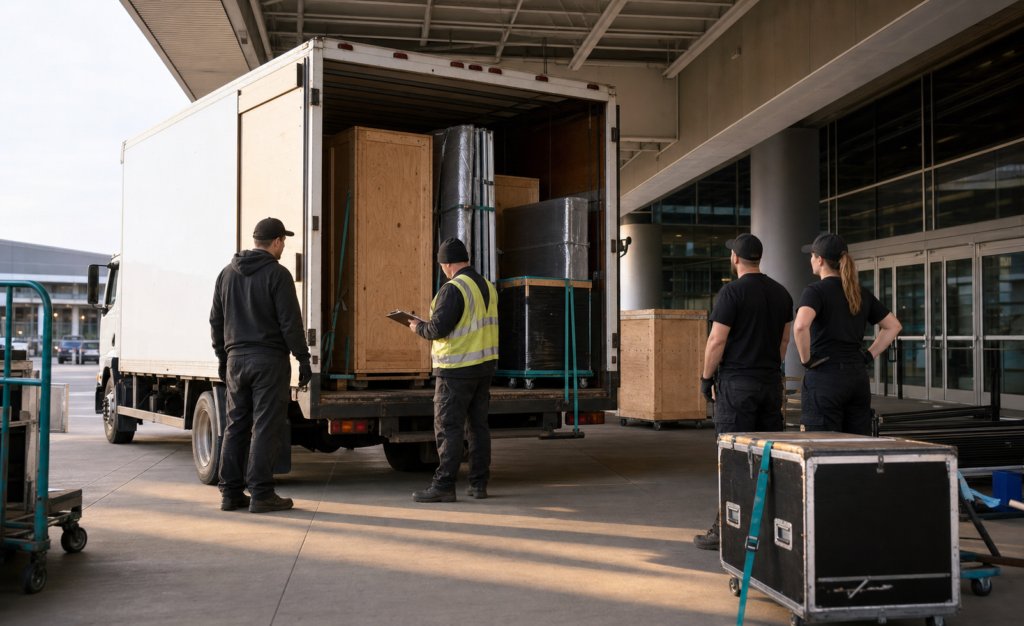
Yes, specialized logistics providers can guarantee trade show delivery dates, but you need to understand what that guarantee actually covers and what it costs. The key is working with a partner who builds the entire shipping plan around your show schedule, not one who treats your booth like just another pallet. Guarantees work best when they're backed by contractual service level agreements, dedicated vehicles and constant communication from pickup through delivery. The catch is that no guarantee is absolute, so your job is to stack the odds in your favor through early planning and the right logistics partner.
Authoritative Frameworks Referenced: The Service Level Agreement framework, as outlined by logistics analysts at Ryder, defines the contractual backbone of any delivery guarantee through performance metrics, responsibilities, penalties and review mechanisms. The Three-Phase Trade Show Logistics model used by Global Experience Specialists and ProExhibits breaks the process into inbound shipping, material handling and drayage and outbound shipping, each with distinct responsibilities that affect whether your materials arrive on time. Understanding both frameworks helps exhibitors see exactly where guarantees apply and where gaps can appear.
How far ahead should I book trade show shipping?
The honest answer is earlier than you think. Most experienced exhibitors start coordinating logistics eight to twelve weeks before a show, especially for large or complex booth setups. If you're shipping to an advance warehouse, which is a facility that receives and holds freight before the show venue opens, you'll typically need materials there two to four weeks before the event. Waiting until the last minute doesn't just risk late delivery; it forces you into emergency expedited rates that can blow your budget.
Here's the thing: trade shows have hard deadlines that don't move. The venue has a specific receiving window, and if your freight misses it, you're dealing with drayage contractors, storage fees and possibly an empty booth on opening day. According to an Exhibitor Media Group survey, 52% of exhibitors consider logistics one of their top three challenges.¹ A big reason for that is underestimating lead times.
If you're attending multiple shows per year, and data from Giant Printing suggests U.S. event marketers planned to participate in an average of 42.4 regional trade shows in 2024², the planning burden multiplies fast. Building a shipping calendar at the start of each year and locking in logistics partners early gives you the best shot at smooth deliveries across your entire show season.
What does a delivery guarantee actually cover?
This is where a lot of exhibitors get tripped up. A delivery guarantee from a logistics provider typically means they commit to getting your freight to the venue dock or advance warehouse by a specific date and time. It does not usually cover what happens after the venue's drayage contractor takes over, meaning the process of moving your materials from the loading dock to your actual booth space. That handoff is a common blind spot.
The guarantee is formalized through a service level agreement, or SLA, which spells out performance metrics, communication protocols and what happens if the provider misses the mark. Some SLAs include financial penalties for late delivery, while others offer service credits or priority rebooking. The key is reading the fine print. Nearly all guarantees include exceptions for weather events, customs delays or incorrect shipping information provided by the exhibitor.
Think of it this way: a delivery guarantee is a contractual promise backed by operational planning, not a magic wand. Carriers like those reporting 98% on-time arrivals³ achieve those numbers through dedicated routing, real-time tracking and fewer freight transfers. But those metrics are self-reported by vendors without independent verification, so you should ask any prospective partner for specific performance data and references from other trade show clients.
Is expedited trade show shipping worth the extra cost?
It depends entirely on what's at stake. According to Legacy Supply Chain Services, expedited freight typically costs two to three times more than standard service.⁴ So if your standard shipment runs $3,000, you're looking at $6,000 to $9,000 for a guaranteed expedited option. That's a meaningful jump, and for a small tabletop display at a regional event, it might not make sense.
But if you're a company shipping a $100,000 custom exhibit to a major industry show where you've already invested $30,000 in booth space, travel and staffing, the math changes completely. Missing that show doesn't just waste the shipping cost; it wastes everything. The two to three times premium on freight suddenly looks like cheap insurance.
If you're attending high-visibility events where your booth is a major revenue driver, guaranteed expedited service is almost always worth it. If you're running smaller activations at regional shows with simpler setups, standard shipping with an earlier send date might be the smarter play. The key is matching the service level to the stakes of each individual show, not applying a one-size-fits-all approach across your event calendar.
Should I ship to an advance warehouse or direct to the show?
Both options have real advantages, and the right choice depends on your timeline and tolerance for risk. Shipping to an advance warehouse means your materials arrive at a secure facility weeks before the show, then get consolidated and delivered to the venue during the official receiving window. This gives you a buffer against transit delays and ensures your freight is in the system early. It's the safer bet for high-value or complex exhibits.
Direct-to-show shipping skips the warehouse step and sends your materials straight to the venue during its designated receiving days. It's faster and sometimes cheaper since you avoid warehouse handling fees. But the receiving windows are tight, sometimes just two or three days and if anything goes wrong in transit, you have almost no margin for recovery.
Here's a practical way to think about it. If your show is in a major convention city during a busy season and your booth takes more than an hour to set up, advance warehouse is your friend. If you're shipping a few boxes of marketing materials to a smaller venue with flexible receiving, direct shipping works fine. Many experienced exhibitors use a hybrid approach: they send the critical, hard-to-replace booth components to the advance warehouse and ship lighter support materials direct.
How do I protect booth materials from shipping damage?
Damage during transit is one of those problems that's mostly preventable but devastating when it happens. The first line of defense is purpose-built shipping crates, not cardboard boxes. Custom crates with foam inserts protect monitors, lighting rigs and structural components far better than standard packaging. Yes, they cost more upfront, but they pay for themselves the first time they save a $5,000 display panel from a forklift mishap.
The second layer of protection is choosing the right shipping mode. Exclusive use vehicles, where your freight is the only cargo on the truck, eliminate the risk of other shipments shifting into yours during transit. There are no transfers between trucks, no cross-docking at terminals and no strangers handling your materials. This is especially important for fragile or high-value exhibits.
Finally, real-time tracking and communication matter more than most people realize. A good logistics partner doesn't just tell you where your shipment is; they proactively flag issues. If a driver hits unexpected weather or a route problem, you want to know immediately so you can adjust plans. The combination of proper packaging, dedicated transport and constant visibility is what separates exhibitors who show up confident from those who show up crossing their fingers.
What should I do if my trade show shipment is delayed?
First, don't panic, but do act fast. If you get word that your shipment is running behind, contact your logistics provider immediately and ask for specific details: where is the freight right now, what caused the delay and what recovery options exist. A good partner will already be working on solutions before you call, but you need to be in the loop.
Your recovery options depend on how much time you have. If the show is still days away, your provider might reroute to an expedited service, switch to a faster transport mode or dispatch a dedicated vehicle to close the gap. If the show opens tomorrow and your booth is still three states away, you're looking at emergency hotshot delivery using sprinter trucks or cargo vans that drive straight through without stops. This is expensive, but it's cheaper than an empty booth.
The bigger lesson is building contingency into your plan from the start. Ship early enough that a one or two day delay doesn't become a crisis. Keep a small emergency kit of essential materials, like banners, business cards and a portable display, that you can carry with you on the plane. And make sure your logistics partner has 24/7 availability, because shipping problems don't wait for business hours. The global exhibition market is projected to reach $92.7 billion by 2030 according to the Business Research Company⁵, which means venues are getting busier and the margin for error is shrinking.
When might a delivery guarantee not be worth it?
Delivery guarantees aren't a universal solution, and there are real scenarios where the premium doesn't pencil out. For small shows where your total exhibit investment is under $5,000 to $15,000, paying two to three times the standard freight rate⁴ for a guarantee can eat a disproportionate chunk of your budget. In those cases, simply shipping a week earlier on standard service might give you the same peace of mind at a fraction of the cost.
There are also structural limitations to be aware of. Most delivery guarantees only cover transit to the venue dock, not the drayage process that moves your materials from the dock to your booth. Venue-appointed drayage contractors operate on their own timelines, and your logistics provider has no control over them. So even a perfectly on-time delivery can sit on a loading dock for hours if the venue is backed up.
Finally, the data supporting guarantee claims deserves some scrutiny. On-time performance metrics like 98% or 99.9% are typically self-reported by vendors without independent audits, disclosed sample sizes or standardized definitions of what counts as on time.³ That doesn't mean the numbers are wrong, but it does mean you should ask pointed questions. Request references from trade show clients specifically, and ask what happens contractually when the guarantee is missed. A guarantee is only as strong as the accountability behind it.
Key Takeaways
- Trade show delivery guarantees are conditional, not absolute.
- Expedited freight costs two to three times standard rates but prevents far costlier failures.
- Over half of exhibitors rank logistics among their top three challenges.
- Advance warehouse shipping adds a critical buffer against transit delays.
- Exclusive use vehicles eliminate transfers, cross-docking and damage risk.
About This Topic
Trade show booth logistics is a specialized segment of the freight and transportation industry focused on the time-critical, high-stakes movement of exhibit materials to and from convention centers and event venues. With the global exhibition market valued at $70.64 billion in 2025 and projected to grow to $92.7 billion by 2030, the demand for reliable, date-specific delivery services continues to intensify. Exhibitors face unique challenges including rigid venue receiving windows, complex drayage handoffs and the reality that a late shipment can waste tens of thousands of dollars in show investment. Specialized logistics providers address these challenges through dedicated vehicles, advance warehouse coordination, real-time tracking and contractual service level agreements that formalize delivery commitments.
Comparative Analysis Table
| Factor | Option A | Option B | Notes |
|---|---|---|---|
| Transit Control | Standard LTL Freight: Freight shares truck space and transfers between terminals | Dedicated Expedited Service: Exclusive use vehicle with direct routing and no transfers | Dedicated service is preferable for high-value exhibits or tight show deadlines |
| Cost | Standard LTL Freight: Base rate, most affordable option | Dedicated Expedited Service: Two to three times standard rates | Standard is fine when shipping well in advance with low-stakes materials |
| Visibility and Communication | Standard LTL Freight: Basic tracking with periodic updates | Dedicated Expedited Service: Real-time GPS tracking with proactive communication | Dedicated service is essential when schedule changes or last-minute adjustments are likely |
| Damage Risk | Standard LTL Freight: Multiple handling points increase risk | Dedicated Expedited Service: Single load, sealed vehicle, minimal handling | Dedicated is strongly preferred for fragile electronics, custom builds, or irreplaceable components |
| Flexibility | Standard LTL Freight: Fixed schedules, limited ability to reroute | Dedicated Expedited Service: Schedule changes, rerouting, and priority adjustments possible | Dedicated service shines when show dates shift or booth plans change mid-process |
| Guarantee Structure | Standard LTL Freight: Estimated delivery windows, no formal SLA | Dedicated Expedited Service: Contractual SLA with defined accountability | If missing a delivery date has significant financial consequences, an SLA-backed service is worth the premium |
How to Implement
-
Map Your Show Calendar and Deadlines
Start by listing every show you're attending this year along with venue receiving windows, advance warehouse deadlines and setup dates. Work backward from each show's move-in day to establish your latest possible ship date, then add a buffer of at least three to five business days.
-
Choose a Logistics Partner With Trade Show Experience
Look for a provider who specializes in time-critical and event logistics, not just general freight. Ask specifically about their on-time performance with trade show shipments, their communication protocols and how they handle schedule changes. Request references from other exhibitors.
-
Define Your Service Level Agreement
Negotiate an SLA that specifies delivery dates, communication frequency, tracking requirements and what happens if the guarantee is missed. Make sure the agreement covers both inbound and outbound shipping for each show.
-
Decide Between Advance Warehouse and Direct-to-Show
Evaluate each show individually. For major events with complex booths, ship to the advance warehouse two to four weeks early. For simpler setups at smaller venues, direct shipping during the receiving window may be sufficient and more cost-effective.
-
Invest in Proper Packaging and Labeling
Use custom crates with foam inserts for fragile components. Label every piece with the show name, booth number, exhibitor name and a contact phone number. Poor labeling is one of the most common and preventable causes of show-site confusion.
-
Build a Contingency Plan for Every Show
Keep an emergency kit with essential materials you can carry personally. Confirm your logistics partner offers 24/7 emergency support and has access to hotshot vehicles for last-minute recovery. Know your backup options before you need them.
Troubleshooting FAQs
My shipment arrived at the venue but hasn't reached my booth space. What's happening?
This is almost always a drayage issue, not a shipping issue. Once your freight reaches the venue dock, the show-appointed drayage contractor takes over and moves materials to individual booths. During busy move-in periods, this can take hours or even a full day. Contact show management or the drayage provider directly for a status update. Your logistics partner's guarantee typically covers delivery to the dock, not to the booth, so understanding this handoff point is critical for managing expectations.
My show dates just changed and I need to adjust the shipping schedule. Is that possible?
Yes, but it depends on your logistics partner and how far along the shipment is. Providers who specialize in trade show and event logistics are accustomed to schedule changes and build flexibility into their operations. Contact your provider immediately with the new dates. If your freight is already in transit on a dedicated vehicle, rerouting or holding is usually straightforward. If it's on a shared LTL truck or already at an advance warehouse, adjustments may involve additional fees or coordination with the warehouse facility.
Implementation Stories
Best Practices Checklist
- Book your logistics partner at least eight to twelve weeks before each show and confirm all deadlines in writing.
- Ship high-value or complex booth components to an advance warehouse rather than relying on direct-to-show delivery.
- Require real-time GPS tracking and proactive communication updates for every shipment.
- Use custom crates with foam inserts for fragile items and label every piece with show name, booth number and contact information.
- Negotiate a written SLA that defines delivery dates, communication protocols and accountability measures for missed deadlines.
- Maintain a carry-on emergency kit with essential marketing materials for every show you attend.
Glossary
| Term | Definition |
|---|---|
| Drayage | The process of moving freight from the venue's loading dock to your individual booth space, typically handled by a show-appointed contractor rather than your shipping provider. |
| Advance Warehouse | A secure facility that receives and stores your exhibit materials weeks before the show, then consolidates and delivers them to the venue during the official receiving window. |
| Exclusive Use Vehicle (EUV) | A dedicated truck carrying only your shipment with no other cargo, eliminating transfers, cross-docking, and the risk of damage from other freight. |
| Service Level Agreement (SLA) | A formal contract between you and your logistics provider that defines specific delivery commitments, performance metrics, communication requirements, and consequences for missed targets. |
| Hotshot | An emergency expedited shipment using a smaller dedicated vehicle like a cargo van or sprinter truck, dispatched immediately for time-critical deliveries. |
References
- Exhibitor Media Group. "Trade Show Exhibitor Logistics Survey". Highmark TechSystems. https://highmarktech.com/news/how-to-conquer-the-top-5-challenges-of-trade-show-exhibiting/.
- Giant Printing. "U.S. Event Marketing Participation Data". Giant Printing. January 1, 2024. https://giantprinting.com/trade-show-statistics/.
- UNIS. "Guaranteed Delivery Service Performance". UNIS Logistics. https://www.unisco.com/transportation/guaranteed-delivery.
- Legacy Supply Chain Services. "Expedited Shipping Guide". Legacy Supply Chain Services. https://legacyscs.com/expedited-shipping-guide/.
- Business Research Company. "Global Exhibition Market Report". Business Research Company. January 1, 2025. https://www.thebusinessresearchcompany.com/report/exhibition-global-market-report.
Need help planning a shipment?
Talk with PEI about expedited freight, specialized freight, or your next shipping challenge.
