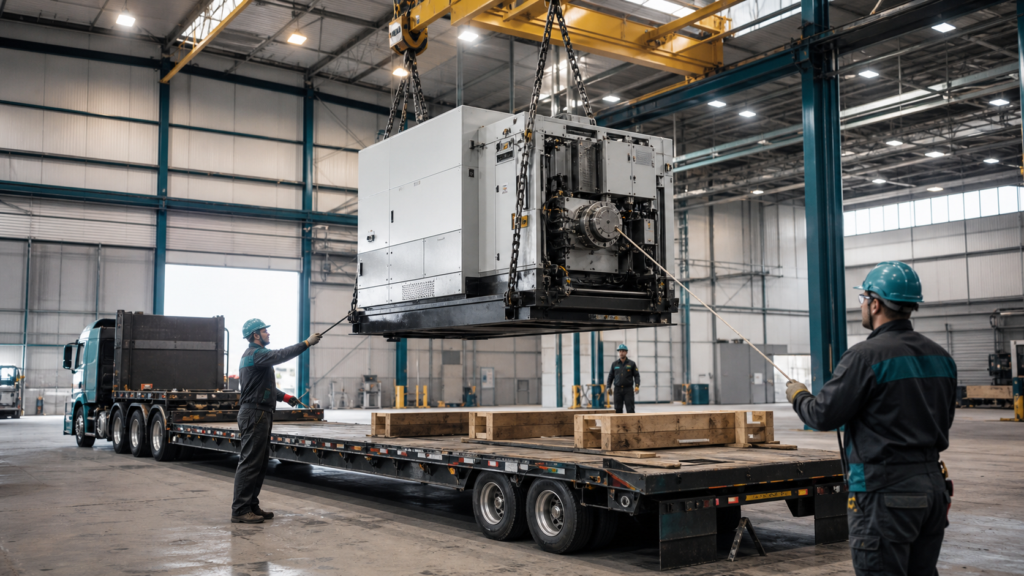
If you're shipping a CNC machine, a trade show booth or a critical replacement part that needs to arrive on a specific date and time, standard freight probably won't cut it. Specialized freight providers handle the moves that regular carriers either can't or won't touch, from oversized loads requiring permits and escort vehicles to urgent shipments that need an exclusive use vehicle running straight through with no transfers. You're paying more per mile, but the real question is what it costs you when something goes wrong with a cheaper option.
Authoritative Frameworks Referenced: Transportation logistics professionals frequently apply Total Cost of Ownership analysis, which evaluates freight decisions beyond the rate quote to include delay costs, damage risk and administrative burden. Risk-Based Decision Making frameworks help identify when equipment value, delivery deadlines or production schedules justify premium services. Supply Chain Resilience models recommend maintaining relationships with specialized expedited providers as contingency capacity for critical moves while routing routine shipments through standard channels.
What makes freight 'specialized' versus standard shipping?
Think of it this way: standard freight is built for palletized cargo that fits neatly into a 53-foot trailer, moves through a hub-and-spoke network and arrives within a general window. Specialized freight covers everything that falls outside those tidy parameters. That includes oversized or overweight equipment requiring step-deck trailers, RGNs, lowboys or extendable flatbeds. It also covers time-critical shipments that need exclusive use vehicles, meaning your freight is the only thing on that truck from pickup to delivery with no cross-docking, no transfers and no delays.
The global specialized freight trucking market is projected to grow from $1.17 trillion in 2025 to over $1.7 trillion by 2030, according to a Global Market Report on Specialized Freight Trucking.¹ That growth reflects the reality that modern manufacturing and industrial operations increasingly depend on equipment and components that don't fit the standard shipping mold. Whether it's an aerospace engine component that needs priority handling or a trade show exhibit that must arrive show-ready at a marshalling yard on a specific date, these shipments demand coordination, communication and equipment flexibility that standard carriers aren't set up to provide.
If you're shipping something that requires special permits, escort vehicles, custom securement, real-time GPS tracking or delivery at a precise appointment time, you're in specialized freight territory. The distinction isn't just about size or weight. It's about the level of care, communication and accountability your shipment demands.
How much does manufacturing downtime actually cost?
The number that gets cited most often is $260,000 per hour as an average manufacturing downtime cost, drawn from multiple industry analyses that survey and model lost revenue, repair expenses and cascading operational impacts.² Here's the thing, though: that figure is an average across industries and company sizes and the methodology behind it varies from study to study. A small job shop with 20 employees isn't losing a quarter million dollars an hour. A major automotive assembly plant might lose far more.
What matters for your decision-making isn't the headline number but your own math. Calculate what one hour of stopped production costs your specific operation: lost output, idle labor, missed customer deadlines, potential contract penalties and the ripple effects on downstream schedules. Even if your number is $5,000 per hour, which is modest by industry standards, a two-day delay on a critical part costs you $240,000. That context is what makes the two-to-three-times premium on expedited freight look like a bargain rather than an extravagance.³
If you're an operations manager or planner, run this calculation for your facility before you need it. Having that number ready turns freight decisions from gut calls into clear cost-benefit analyses.
What equipment types need specialized freight handling?
The list is longer than most people expect. CNC machines, industrial presses, turbines, generators, large-format printing equipment, semiconductor manufacturing tools and construction machinery all typically require specialized handling. So do trade show exhibits, which might not be heavy but demand precise timing, careful handling and coordination with show decorators and marshalling yards. Aerospace components, including engine assemblies, often need priority handling with real-time tracking and chain-of-custody documentation.
The Federal Motor Carrier Safety Administration requires a minimum of four tie-downs for any piece of heavy equipment over 10,000 pounds and that's just the federal baseline.⁴ Individual states layer on additional securement, permitting and routing requirements for oversized or overweight loads. A piece of mining equipment that's 12 feet wide needs route surveys, oversize permits and possibly pilot cars. Getting any of that wrong doesn't just risk a fine; it risks your equipment and everyone on the road.
If you're shipping anything that requires a step-deck, RGN, lowboy, Conestoga or extendable trailer, you're already past what most standard carriers handle well. The same goes for high-value items where damage isn't just an inconvenience but a six-figure problem. In those cases, you want a provider whose entire business is built around solving exactly these kinds of moves.
When is paying extra for expedited freight actually worth it?
The short answer: whenever the cost of delay exceeds the freight premium. Expedited freight typically runs two to three times the cost of standard services, according to industry rate comparisons.³ That sounds steep until you stack it against what's at stake. A production line waiting on a replacement part, a trade show booth that misses its installation window, an aerospace component needed for an aircraft-on-ground situation: in each of these scenarios, the freight cost is a rounding error compared to the consequences of being late.
Here's a practical framework. If you're shipping a routine restock of consumable parts with a two-week buffer in your inventory, standard freight makes perfect sense. But if you're shipping a custom-machined component to meet a just-in-time production schedule, or delivering exhibit materials to a convention center with a hard move-in deadline, the calculus flips completely. The value isn't just speed; it's certainty. Exclusive use vehicles with real-time GPS tracking, no transfers between terminals and direct communication throughout the move give you control over timing that standard freight simply can't match.
If you're a planner or coordinator juggling multiple time-sensitive moves, building a relationship with a specialized provider before the emergency hits gives you faster response times and better rates than calling cold when you're already in crisis mode.
What permits and regulations apply to oversized industrial loads?
This is where things get complicated fast. At the federal level, the Federal Motor Carrier Safety Administration sets baseline cargo securement standards, including that minimum four-tie-down rule for equipment over 10,000 pounds.⁴ But permits for oversized and overweight loads are issued state by state and every state has its own dimensions, weight limits, travel-time restrictions and route requirements. A load that's legal in Texas might need a special permit in Oklahoma and a different permit with escort vehicles in Colorado.
For truly oversized equipment, like wide-body industrial machinery or tall construction equipment, you'll need route surveys to check bridge clearances, overhead wires and road width. Some states restrict oversize moves to daylight hours only. Others require law enforcement escorts above certain dimensions. Missing any of these requirements can result in fines, impounded loads or forced detours that blow your delivery schedule.
This is one of the strongest arguments for using a specialized freight provider rather than trying to coordinate these moves yourself. Providers who handle oversized and overweight freight daily have permit services built into their operations and know the routing quirks of every corridor. They handle the paperwork, the escorts and the compliance so you can focus on what happens after the equipment arrives.
What's the difference between a carrier, broker and freight forwarder?
These three terms get thrown around interchangeably, but they're actually quite different roles. A carrier owns trucks and employs drivers. They physically move your freight. A freight broker arranges transportation by connecting shippers with carriers but doesn't own equipment or handle the freight directly. A freight forwarder typically consolidates shipments and manages complex logistics, often involving multiple transportation modes or international borders.
For specialized industrial equipment moves, the distinction matters more than you might think. A standard freight broker might find you the cheapest available truck, but they may not understand the securement requirements for a 30,000-pound CNC machine or the marshalling yard procedures for a trade show delivery. Specialized providers often operate as a hybrid, brokering capacity across a vetted network of carriers they've built relationships with while adding a layer of coordination, communication and problem-solving that a pure broker or carrier can't match.
What you really want to evaluate is capability and accountability, not business model labels. Can the provider handle schedule changes without the whole plan falling apart? Do they offer real-time tracking and proactive communication? Will they solve problems at 2 AM on a Saturday? Those operational realities matter far more than whether they technically classify as a broker or a carrier.
How should I prepare industrial equipment for shipment?
Preparation is where a lot of equipment damage actually originates, not during transit. Start by draining all fluids from machinery that contains hydraulic oil, coolant or fuel. Disconnect and secure any loose components, including tooling, accessories, control panels and detachable arms or appendages. If the equipment has a screen, control interface or precision components, protect them with custom crating or heavy-duty padding, not just a moving blanket.
Document everything before the equipment leaves your facility. Take detailed photos from multiple angles, noting any pre-existing scratches, dents or wear marks. Record serial numbers and dimensions, including height with any protruding components. Accurate weight is critical because underestimating weight can lead to the wrong trailer showing up, securement failures or permit violations on overweight loads.
Communicate special handling requirements clearly and early. If the machine needs to stay upright, if it's sensitive to vibration, if it requires climate control or if there are specific rigging points for crane loading, your freight provider needs to know all of this before they dispatch a truck. The best outcomes happen when the shipper and the provider plan the move together rather than treating it as a simple pickup order.
When might specialized freight not be worth the premium?
Honest answer: most of the time. If you're shipping standard palletized goods with flexible delivery windows and no special handling requirements, paying two to three times the standard rate for expedited or specialized service is throwing money away.³ The premium only makes sense when time sensitivity, equipment value or shipment complexity genuinely demands it.
It's also worth noting some limitations in the data that drives these decisions. The often-cited $260,000-per-hour downtime figure is an industry average that may not reflect your reality.² Studies use varying methodologies and sample sizes and smaller manufacturers typically experience much lower actual costs. Similarly, many of the ROI studies around logistics technology and managed freight services come from vendors with a vested interest in promoting the benefits, often showcasing only their most successful implementations.⁵ That doesn't mean the benefits aren't real, but it means you should run your own numbers rather than relying on industry averages.
If you're evaluating whether to use specialized freight, ask three questions. Is the shipment time-critical with a hard deadline? Is the cargo value or fragility high enough that damage would be catastrophic? Does the shipment require equipment, permits or coordination beyond what standard carriers provide? If you answer no to all three, save your money and ship standard. The specialized providers worth working with will tell you the same thing.
Key Takeaways
- Expedited freight costs two to three times more but prevents downtime losses that dwarf the premium.
- Manufacturing downtime averages $260,000 per hour, though actual costs vary widely by operation size.
- Federal rules require minimum four tie-downs for equipment over 10,000 pounds.
- The best freight provider relationships are built before the emergency, not during it.
- Specialized freight is only worth the premium when time, value or complexity demands it.
About This Topic
Specialized freight for manufacturing and industrial equipment encompasses the transportation of cargo that falls outside the capabilities of standard shipping services due to size, weight, value, fragility or time sensitivity. This includes oversized machinery requiring special trailers and permits, time-critical components for production lines, trade show exhibits with hard delivery deadlines, aerospace parts needing priority handling and any shipment where the consequences of delay or damage significantly outweigh the freight cost. The U.S. specialized freight trucking market is valued at approximately $68 billion, reflecting the essential role these services play in keeping manufacturing, construction, aerospace, energy and event industries operational.
Comparative Analysis Table
| Factor | Option A | Option B | Notes |
|---|---|---|---|
| Transit Time Control | Standard LTL or FTL: Estimated delivery windows, hub transfers, potential delays at terminals | Specialized Expedited: Exclusive use vehicles, direct routes, no cross-docking or transfers | Specialized wins when delivery must hit a specific date and time, such as trade show move-in or production line restart |
| Cost Per Shipment | Standard Freight: Lower base rate, typically the most economical option for routine moves | Specialized Expedited: Two to three times standard rates for dedicated capacity and priority handling | Standard is preferable for non-urgent shipments with flexible delivery windows |
| Visibility and Communication | Standard Freight: Basic tracking updates, limited proactive communication, call center support | Specialized Provider: Real-time GPS tracking, proactive status updates, direct contact with coordinators | Specialized is critical for high-value or time-sensitive cargo where you need to know exactly where your freight is |
| Equipment Flexibility | Standard Carrier: Dry van and standard flatbed options, limited specialty trailer availability | Specialized Provider: Access to step-decks, RGNs, lowboys, Conestogas, sprinter vans, cargo vans, and hotshots | Specialized is necessary when cargo dimensions, weight, or handling requirements exceed standard trailer capabilities |
| Schedule Change Handling | Standard Freight: Rigid schedules, changes may require rebooking and additional fees, slow response | Specialized Provider: Built to accommodate changes, fast re-routing, flexible dispatch | Specialized providers excel when projects involve unpredictable timelines or last-minute adjustments |
| Permit and Compliance Management | Standard Freight: Shipper typically responsible for oversize permits and route planning | Specialized Provider: Permit services, route surveys, and escort coordination handled as part of the move | Specialized is essential for oversized or overweight loads crossing multiple state lines |
How to Implement
-
Assess Your Shipment Requirements
Start by documenting exact dimensions, weight, value and any special handling needs for your equipment. Note whether it requires climate control, must stay upright or has specific rigging points. Determine your delivery deadline and whether it's a hard date or a flexible window. This information drives every decision that follows.
-
Calculate Your True Cost of Delay
Run the numbers on what a missed delivery actually costs your operation. Factor in idle labor, lost production output, missed customer commitments and any contract penalties. Compare that figure to the premium for expedited or specialized freight. This calculation tells you whether the premium is an expense or an investment.
-
Choose the Right Equipment and Service Level
Match your cargo to the right trailer type and service tier. A 45,000-pound press needs an RGN with permits. A trade show exhibit might need a Conestoga for weather protection and a delivery appointment at a marshalling yard. An urgent replacement part might need a sprinter van running exclusive use overnight. Get this match wrong and everything downstream suffers.
-
Prepare the Equipment and Documentation
Drain fluids, secure loose components, protect sensitive surfaces and crate fragile elements before the truck arrives. Photograph everything, record serial numbers and provide accurate weights. Share all special handling instructions with your provider in writing, not just verbally at pickup.
-
Establish Communication Protocols
Agree upfront on how and when you'll receive updates. For critical moves, insist on real-time GPS tracking and a direct line to the coordinator managing your shipment. Make sure your receiving team knows the expected arrival window and has equipment ready for unloading. Clear communication at both ends prevents the last-mile failures that ruin otherwise perfect moves.
Troubleshooting FAQs
What should I do if my equipment shipment is delayed mid-transit?
Contact your freight provider immediately and get a specific update on location, cause of delay and revised estimated arrival. If you're using a specialized provider with real-time tracking, you should already have visibility into the situation. Simultaneously, notify your receiving team and any downstream stakeholders like installers, technicians or event coordinators about the revised timeline. If the delay threatens a critical deadline, ask your provider about recovery options such as re-routing, driver relay or switching to a faster mode for the remaining distance. The providers who handle this best are the ones you've built a relationship with before the crisis, because they'll prioritize your freight and work the problem rather than just apologize for it.
How do I handle a situation where the wrong trailer type shows up for my equipment?
Don't load it. Forcing equipment onto the wrong trailer creates securement problems, potential damage and possible regulatory violations. Call your provider right away and explain the mismatch, including specific dimensions or weight that won't work with the trailer that arrived. A good specialized provider will have backup capacity and can dispatch the correct equipment quickly, sometimes within hours. To prevent this from happening in the first place, provide detailed and accurate equipment specs when booking, including height with any protruding components, total weight with attachments and whether the load requires ramp access, a step-deck or a removable gooseneck. Photos of the equipment are worth a thousand words in these situations.
Implementation Stories
Best Practices Checklist
- Build relationships with specialized freight providers before you have an emergency so you get priority response and better rates when urgency hits.
- Document exact equipment dimensions, weight and handling requirements in a standard shipping profile you can share instantly with any provider.
- Calculate your facility's actual hourly downtime cost and keep it updated so freight decisions become clear cost-benefit analyses rather than guesswork.
- Photograph all equipment from multiple angles before shipment and share images with your provider to ensure proper trailer and securement planning.
- Insist on real-time GPS tracking and a direct communication line for any shipment where timing, value or fragility makes the move critical.
- Review your freight provider's ability to handle schedule changes gracefully, because in manufacturing and events, plans change constantly.
Glossary
| Term | Definition |
|---|---|
| Exclusive Use Vehicle (EUV) | A truck dedicated entirely to your shipment with no other freight on board. Your cargo goes straight from pickup to delivery with no terminal stops, no cross-docking, and no transfers between trucks. |
| RGN (Removable Gooseneck) Trailer | A lowboy-style trailer whose front end detaches so the deck drops to ground level, creating a ramp for driving or rolling heavy equipment directly onto the trailer without a crane. |
| Conestoga Trailer | A flatbed trailer with a retractable tarp system that slides open for side or top loading like a flatbed but closes to provide enclosed protection during transit, useful for weather-sensitive freight that still needs crane or forklift access. |
| Marshalling Yard | A staging area near a convention center or event venue where freight trailers check in, wait for their assigned delivery window, and then proceed to the loading dock in a controlled sequence. Common in trade show logistics. |
| Hotshot | An expedited shipment, typically using a smaller vehicle like a sprinter van, cargo van, or medium-duty truck, dispatched quickly for urgent or time-critical deliveries. Often runs direct with no stops. |
References
- The Business Research Company. "Global Specialized Freight Trucking Market Report". The Business Research Company. January 1, 2025. https://www.thebusinessresearchcompany.com/report/specialized-freight-trucking-global-market-report.
- MachineMetrics (citing Aberdeen Research). "The Real Cost of Downtime in Manufacturing". MachineMetrics (citing Aberdeen Research). June 12, 2025. https://www.machinemetrics.com/blog/the-real-cost-of-downtime-in-manufacturing.
- Shippo. "Expedited Shipping: What It Is and Services Compared". Shippo. Accessed July 1, 2026. https://goshippo.com/blog/expedited-shipping-what-it-is-and-services-compared.
- Federal Motor Carrier Safety Administration. "Cargo Securement Rules". FMCSA, U.S. Department of Transportation. January 1, 2025. https://www.fmcsa.dot.gov/regulations/cargo-securement/cargo-securement-rules.
- IBISWorld. "Local Specialized Freight Trucking in the US Industry Analysis, 2026". IBISWorld. January 1, 2026. https://www.ibisworld.com/united-states/industry/local-specialized-freight-trucking/1155/.
Need help planning a shipment?
Talk with PEI about expedited freight, specialized freight, or your next shipping challenge.
