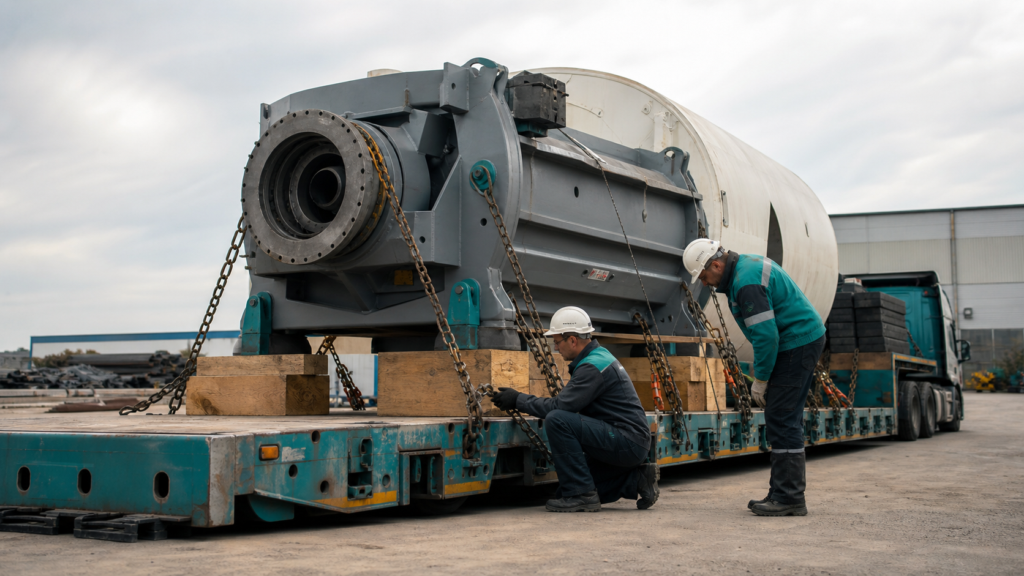
You need to narrow your list to providers who actually specialize in loads that exceed standard highway dimensions and weight limits, not just carriers who say they can handle it. The key is building a shortlist based on verifiable credentials, route-specific experience and the ability to coordinate permits, escorts and specialized equipment. If you're moving a transformer, a press or a turbine housing, the wrong provider can mean permit delays, road shutdowns or damaged equipment. Your shortlist process should be systematic, not just a race to the lowest quote.
Authoritative Frameworks Referenced: Academic logistics research supports a Multi-Criteria LSP Selection Framework that evaluates providers across cost, service quality, reliability, flexibility, technology capability and relational factors rather than cost alone. A Lane Fact Pattern Analysis defines specific route requirements including commodity characteristics, shipment frequency and destination constraints to test whether a provider can actually cover your needs. The Heavy Haul Cost Structure Model from Anderson Trucking Service breaks total cost into base freight rate, permits, pilot cars, police escorts, utility coordination and urgency factors, giving you a realistic picture of what a move actually costs.
How do I know if my equipment counts as oversized?
Here's the baseline you need to know. According to industry guidance from carriers like Lynden Transport and standards referenced by the Federal Motor Carrier Safety Administration, standard legal loads on U.S. highways are limited to 8 feet 6 inches wide, 13 feet 6 inches tall and 80,000 pounds gross vehicle weight.¹ Anything that exceeds even one of those thresholds is considered oversized or overweight and requires special permits, route planning and potentially escort vehicles.
Think of it this way: a standard shipping container fits neatly within those limits. But an industrial boiler, a large generator or a piece of mining equipment almost never does. You'll need to measure not just the equipment itself but the equipment as loaded on the trailer, including any rigging, cradles or protective framing. The loaded height, width and combined weight of the cargo plus trailer plus tractor is what matters.
One important caveat is that state regulations vary and may have different thresholds than the federal baseline.¹ Some states have lower height limits on certain routes, and others require additional permits for loads that are legal in neighboring states. If your shipment crosses multiple states, every state along the route needs its own permit approval, which is exactly why provider expertise in multi-state permitting is so critical to your shortlist criteria.
What permits and escorts does oversized freight actually need?
Every state your load passes through will require its own oversize or overweight permit, and the requirements are not uniform. Some states issue single-trip permits within 24 hours, while others can take a week or more, especially for superloads above certain thresholds. You'll also need to factor in pilot cars, which are escort vehicles that travel ahead of and behind the load to warn other drivers and help navigate tight spots. For very large loads, many states mandate law enforcement escorts and if your route passes under power lines or other utilities, you may need utility company coordination to temporarily raise or disconnect lines.
The cost structure here is layered. According to the Heavy Haul Cost Structure Model developed by Anderson Trucking Service, total cost includes the base freight rate plus permits, pilot cars, police escorts, utility coordination and urgency premiums.³ A single oversize permit might cost $50 in one state and $800 in another. Two pilot cars over a 1,000-mile route can add $3,000 or more. Police escorts often run $75 to $150 per hour per officer. These aren't optional add-ons; they're legal requirements.
If you're evaluating providers, ask specifically how they handle multi-state permitting. Do they have in-house permit coordinators, or do they outsource it? A provider who manages permits internally typically moves faster and catches route restrictions that outsourced permit services might miss.
What should I look for when evaluating specialized freight providers?
Cost is the obvious starting point, but academic research on logistics service provider selection consistently shows that evaluating on price alone leads to worse outcomes. The Multi-Criteria LSP Selection Framework used in academic logistics research recommends scoring providers across cost, service quality, reliability, flexibility, technology capability and relational factors.⁴ For oversized equipment specifically, you need to add engineering capability and regulatory expertise to that list.
Start with verifiable credentials. The Federal Motor Carrier Safety Administration maintains a public database where you can check any provider's operating authority, safety rating, insurance coverage and inspection history.² Freight brokers and forwarders are required to maintain a $75,000 surety bond, but here's a detail many shippers miss: brokers are not required to carry cargo insurance.⁵ That means if your $500,000 piece of equipment is damaged in transit and the broker arranged the move, you may need to file a claim against the actual carrier's insurance, not the broker's. Always ask for certificates of insurance from the actual carrier performing the haul.
Beyond credentials, look for route-specific experience. A provider who regularly moves oversized loads on your specific corridor will know the bridge clearances, construction detours and state trooper requirements by heart. Ask for references from similar moves, not just general testimonials. If you're shipping a 14-foot-tall transformer from Houston to Chicago, you want a provider who has done that route with similar dimensions, not just one who has moved heavy loads somewhere.
How much does it cost to ship oversized industrial equipment?
The honest answer is that it varies enormously, but you can build a reasonable estimate. Marketplace data from uShip shows that heavy equipment shipments to and from California average roughly $2 to $4 per mile, though actual rates swing widely based on dimensions, distance, weight and current market conditions.⁶ That per-mile figure covers the base freight rate only. It doesn't include the permits, escorts and coordination costs that can easily double or triple the total.
Here's a concrete example to make it tangible. Say you need to move a 100,000-pound press brake from Detroit to Atlanta, about 700 miles. At $3 per mile base rate, you're at $2,100 for the truck. Add oversize and overweight permits for Michigan, Ohio, Kentucky, Tennessee and Georgia at an average of $400 each, that's $2,000. Two pilot cars at $1.50 per mile each adds $2,100. If any state requires a police escort, add another $1,000 to $2,000. Utility coordination might add $500 to $1,500 depending on the route. Your total is now somewhere between $7,700 and $9,700 for what looked like a $2,100 move at first glance.
Urgency is another major cost driver. If your production line is down and you need the equipment moved immediately rather than on a standard timeline, expect to pay a significant premium. Time-critical moves require dedicated capacity and expedited permitting, both of which command higher rates. The specialized freight trucking market is projected to expand from $1.17 trillion in 2025 to $1.71 trillion by 2030, according to The Business Research Company, reflecting growing demand for exactly these kinds of complex, non-standard shipments.⁷
Should I use a freight broker or go directly to a heavy-haul carrier?
This is one of the most debated questions in oversized shipping, and the answer depends on your situation. A freight broker or forwarder acts as an intermediary, connecting you with carriers from their network. They can be especially valuable when you need flexibility, meaning access to multiple equipment types like step-deck trailers, RGNs, lowboys or extendable flatbeds without being locked into one carrier's fleet. Brokers who focus on non-standard, time-critical shipments often excel at solving complex logistics puzzles because they can pull from a wider pool of specialized carriers.
Going directly to a heavy-haul carrier makes sense when you have a very specific, recurring lane and the carrier owns the exact equipment you need. Direct relationships can mean more consistent pricing and a dedicated team that knows your equipment intimately. The trade-off is less flexibility. If your usual carrier is booked or doesn't cover a particular route, you're back to square one.
Here's the practical middle ground many experienced shippers land on: use a broker or forwarder who specializes in non-standard freight for complex, one-off or time-sensitive moves and maintain direct carrier relationships for your most predictable, recurring shipments. The key qualifier for any broker is whether they have genuine expertise in oversized logistics, including permit management, route planning and carrier vetting, rather than just posting your load on a board and waiting for bids.
What safety and insurance questions should I ask providers?
Safety in oversized transport isn't abstract. According to impact monitoring data from SpotSee, packages can experience up to 40 shock events ranging from 8 to 36 g-forces during transport.⁸ While that data relates to general shipments rather than exclusively heavy machinery, it underscores how violent transit can be. For a 100,000-pound piece of precision equipment, even moderate shock events can cause misalignment, cracking or internal damage that isn't visible until installation.
Ask every provider on your shortlist these specific questions: What is your cargo insurance coverage limit, and does it cover the full replacement value of my equipment? Who carries the insurance, you or the actual carrier? What is your process for securing and rigging oversized loads? Do you conduct pre-trip route surveys for clearance and road condition issues? What monitoring or tracking do you provide during transit? A provider who can't give you detailed, specific answers to these questions shouldn't make your shortlist.
The FMCSA requires freight brokers to maintain a $75,000 surety bond, but that bond protects carriers from non-payment by the broker, not your cargo from damage.⁵ You need to confirm that the actual carrier performing the haul has adequate cargo insurance for your equipment's value. For high-value industrial equipment, standard cargo policies may not be sufficient and you may need to arrange supplemental transit insurance through your own insurer or a specialty provider.
How do I verify a provider's credentials and track record?
Start with the FMCSA SAFER database, which is publicly accessible and free. You can look up any motor carrier or broker by name, USDOT number or MC number to see their operating authority status, safety rating, insurance on file and inspection results.² This is your first filter. If a provider's authority is inactive, their insurance has lapsed or they have a conditional or unsatisfactory safety rating, they're off your list immediately.
Beyond the federal database, dig into specifics. Ask for references from shippers who have moved similar equipment on similar routes. Call those references and ask pointed questions: Did the load arrive on time? Was there any damage? How did the provider handle unexpected issues like weather delays or permit problems? How was their communication throughout the move? That last question matters more than most people realize. In oversized transport, things go sideways regularly and a provider's ability to communicate proactively and solve problems in real time is often the difference between a minor hiccup and a catastrophe.
If you're working with a broker or forwarder rather than a direct carrier, ask them how they vet the carriers in their network. Do they check carrier safety scores, insurance and equipment condition before dispatching? A good broker will have a documented carrier qualification process. If they can't describe it, that's a red flag.
When might a specialized oversized freight provider not be worth it?
Not every piece of industrial equipment actually needs a specialized heavy-haul provider. If your load fits within the standard legal dimensions of 8.5 feet wide, 13.5 feet tall and 80,000 pounds gross weight, you can use standard flatbed or step-deck carriers at significantly lower cost.¹ Many shippers assume their equipment is oversized when it's actually right at the boundary. Measuring carefully before you start calling specialists can save you thousands.
There are also situations where the data guiding your decision may not be as precise as it appears. Market statistics from firms like Grand View Research and The Business Research Company use global or regional aggregations that may not reflect the specific dynamics of your niche or corridor.⁷ A rate benchmark of $2 to $4 per mile is useful as a starting point, but actual quotes can fall well outside that range depending on equipment availability, seasonal demand and regulatory changes.⁶ State permit rules and FMCSA regulations also evolve over time, so credentials and capabilities you verified six months ago may have changed.
Finally, if your move is straightforward, meaning a single state, well-traveled route, standard oversize dimensions and no time pressure, you may not need the premium service level that specialized providers charge. In those cases, a competent regional carrier with oversize experience and proper permits may be perfectly adequate. The specialized providers earn their premium on complex, multi-state, time-sensitive or engineering-intensive moves where coordination and problem-solving matter most.
Key Takeaways
- Loads exceeding 8.5 feet wide, 13.5 feet tall or 80,000 pounds require specialized transport.
- Total oversized shipping costs often double or triple the base freight rate.
- Freight brokers are not required to carry cargo insurance for your equipment.
- Always verify provider credentials through the FMCSA public safety database.
- Evaluate providers on reliability, communication and route expertise, not just price.
About This Topic
Shortlisting specialized freight providers for oversized industrial equipment involves systematically evaluating carriers, brokers and forwarders based on their ability to handle loads that exceed standard U.S. highway limits of 8.5 feet wide, 13.5 feet tall and 80,000 pounds. The process requires assessing provider credentials through the FMCSA database, verifying route-specific experience, confirming adequate cargo insurance coverage and evaluating communication and problem-solving capabilities. With the specialized freight trucking market projected to reach $1.71 trillion by 2030, demand for qualified oversized transport providers continues to grow, making a disciplined selection process increasingly important for shippers moving high-value industrial equipment.
Comparative Analysis Table
| Factor | Option A | Option B | Notes |
|---|---|---|---|
| Carrier network flexibility | Direct heavy-haul carrier: Limited to owned fleet and equipment types | Specialized freight broker or forwarder: Access to multiple carriers, trailer types, and equipment configurations | Brokers are preferable for one-off or variable moves requiring different equipment types |
| Pricing consistency | Direct carrier: More predictable rates on recurring lanes | Broker or forwarder: Rates vary by carrier availability and market conditions | Direct carriers are better for high-frequency, same-lane shipments |
| Permit and route management | Direct carrier: Often handles permits in-house with dedicated staff | Broker or forwarder: May coordinate permits or rely on carrier to handle them | Ask specifically who manages permits; in-house capability speeds up complex multi-state moves |
| Communication and problem-solving | Direct carrier: Single point of contact but limited options if issues arise | Broker or forwarder: Can pivot to alternative carriers quickly when problems occur | For time-critical or high-value moves, the ability to pivot fast is a significant advantage |
| Insurance and liability | Direct carrier: Carries own cargo insurance; liability is straightforward | Broker or forwarder: May not carry cargo insurance; must verify actual carrier's coverage | Always confirm cargo insurance from the entity physically transporting the equipment |
| Urgency and expedited capability | Direct carrier: Capacity depends on fleet availability at that moment | Broker or forwarder: Can source dedicated or exclusive-use vehicles from broader network | Brokers specializing in expedited, non-standard freight excel in emergency and time-critical scenarios |
How to Implement
-
Measure and Document Your Load Precisely
Start by recording the exact dimensions and weight of your equipment as it will sit on a trailer, including any rigging, cradles or protective framing. Compare these against federal limits of 8.5 feet wide, 13.5 feet tall and 80,000 pounds gross vehicle weight to confirm you actually need specialized transport.
-
Define Your Route and Timeline Requirements
Map out your origin, destination and any intermediate stops. Identify every state the load will cross, note any known restrictions like low bridges or weight-limited roads and establish your delivery window. Be honest about whether this is a flexible timeline or a hard deadline.
-
Build an Initial Provider List Using Verifiable Sources
Search the FMCSA SAFER database to identify providers with active operating authority, satisfactory safety ratings and adequate insurance. Ask industry contacts and trade associations for referrals. Aim for five to eight candidates to evaluate.
-
Screen Providers Against Your Specific Lane and Cargo Requirements
Contact each provider with your exact load specifications, route and timeline. Ask about their experience with similar dimensions and weights on your specific corridor. Eliminate any provider who can't demonstrate relevant route experience or who gives vague answers about permitting and equipment.
-
Evaluate Your Top Three Candidates on Multiple Criteria
Score your remaining candidates on cost, reliability, communication responsiveness, permit management capability, insurance coverage, tracking technology and references from similar moves. Use a structured scoring approach rather than defaulting to the lowest bid.
-
Confirm Insurance, Conduct a Pre-Move Review and Finalize
Request certificates of insurance from the actual carrier performing the haul, not just the broker. Review the route plan, permit timeline, escort arrangements and communication protocol. Confirm who your point of contact will be during transit and how updates will be delivered.
Troubleshooting FAQs
What if my provider says permits are delayed and the move can't happen on schedule?
Permit delays are common, especially for superloads or multi-state moves. Ask your provider immediately which specific state or agency is causing the delay and what the realistic new timeline looks like. If you're working with a broker or forwarder, ask whether an alternative route through different states could avoid the bottleneck. For truly time-critical moves, some providers have expedited permit relationships or can reroute through states with faster processing. The key is early communication. A good provider will flag potential permit issues days before the scheduled move, not the morning of.
What do I do if my equipment arrives damaged after an oversized move?
Document everything immediately. Take photos and video of the damage before the equipment is unloaded if possible, and note the condition on the delivery receipt. File a written claim with the carrier's cargo insurance provider within the timeframe specified in the bill of lading, which is typically nine months for domestic moves. If a broker arranged the move, remember that the claim goes against the carrier's insurance, not the broker's surety bond. For high-value equipment, having your own supplemental transit insurance policy simplifies the process significantly because you file with your own insurer and they pursue recovery from the carrier.
Implementation Stories
Best Practices Checklist
- Measure your equipment as loaded on the trailer, not just the equipment alone, to get accurate dimensions and weight.
- Verify every provider's operating authority, safety rating and insurance status through the FMCSA public database before requesting quotes.
- Request certificates of cargo insurance from the actual carrier performing the haul, not just the broker or forwarder.
- Ask for references from shippers who moved similar equipment on similar routes, and actually call those references.
- Build permit processing time into your project timeline, especially for multi-state moves or superloads.
- Establish a clear communication protocol before the move, including who your point of contact is, how often you'll get updates and what happens if something goes wrong.
Glossary
| Term | Definition |
|---|---|
| RGN (Removable Gooseneck Trailer) | A lowboy-style trailer whose front end detaches so equipment can be driven or rolled onto the deck from ground level, commonly used for very heavy or tall machinery. |
| Pilot Car (Escort Vehicle) | A vehicle that travels ahead of or behind an oversized load to warn other drivers, help navigate tight spots, and ensure the route is clear of obstructions. |
| Superload | A shipment that exceeds the standard oversize permit thresholds set by a particular state, typically requiring additional engineering review, route surveys, and sometimes structural bridge analysis before approval. |
| Gross Vehicle Weight (GVW) | The combined weight of the truck, trailer, cargo, fuel, and driver. The federal highway limit is 80,000 pounds without special permits. |
| Surety Bond | A financial guarantee required by the FMCSA for freight brokers and forwarders, currently set at $75,000, that protects carriers from non-payment. It does not cover cargo damage claims. |
References
- Lynden. "Standard Legal Load Dimensions and Weight Limits". Lynden. January 1, 2024. https://www.lynden.com/solutions/capabilities/oversized-heavy-haul/.
- Federal Motor Carrier Safety Administration. "FMCSA Motor Carrier Registration and Safety Database (SAFER)". U.S. Department of Transportation. January 1, 2024. https://safer.fmcsa.dot.gov.
- Anderson Trucking Service (ATS). "Heavy Haul Shipping Rates: The True Cost of Heavy Equipment Hauling". Anderson Trucking Service. January 1, 2024. https://www.atsinc.com/blog/heavy-haul-shipping-rates-true-cost-heavy-machinery.
- IEOM Society International. "Criteria Affecting the Selection of Logistics Service Provider for Retail Small and Medium Enterprise in Thailand". IEOM Society International. March 6-8, 2018. http://ieomsociety.org/ieom2018/papers/315.pdf.
- Federal Motor Carrier Safety Administration. "Freight Broker and Forwarder Surety Bond Requirements". U.S. Department of Transportation. January 1, 2024. https://www.fmcsa.dot.gov/registration/broker-and-freight-forwarder-financial-responsibility-rule-faqs.
- uShip. "Heavy Equipment Shipping Cost Estimates". uShip Marketplace. January 1, 2024. https://www.uship.com/cost-to-ship/heavy-equipment/.
- The Business Research Company. "Specialized Freight Trucking Market Size and Growth Projections". The Business Research Company. January 1, 2024. https://www.thebusinessresearchcompany.com/report/specialized-freight-trucking-global-market-report.
- SpotSee. "Shocks, Impacts, Vibrations, and Tilts: How to Monitor and Indicate Them". SpotSee. January 1, 2024. https://spotsee.io/uncategorized/shocks-impacts-vibrations-and-tilts-how-to-monitor-and-indicate-them/.
Need help planning a shipment?
Talk with PEI about expedited freight, specialized freight, or your next shipping challenge.
