
Freight Delays: How The World Cup Might Affect Trucking Lanes
The FIFA World Cup is one of the biggest sporting events in the world. It catches the attention of billions of people across over 200 countries. And this year, the USA is one of the hosts, along with Canada and Mexico. With multiple major knock out games being held right here in PEI’s backyard, Atlanta, GA. But we’re anticipating major freight delays as an impact.
When most people think of the World Cup, they think about the fans, the flags, match days, the stadiums, etc. But behind all huge events like these, there are huge supply chains keeping things moving. From the food and drink, the merchandise, to the technical equipment, everything must be coordinated seamlessly. But guess what, amongst all of this, everyday shippers still need their freight to move and on time too.
Throughout June and July this year, host cities across the U.S. will welcome hundreds and thousands of fans, media, sponsors, vendors, security teams, hospitality crews and event operators. This kind of activity can add a lot of strain and pressure on already busy freight markets. Although the World Cup won’t affect every shipment, the games can have knock-on effects in the way of delays, re-routes and rescheduled shipments in specific cities, on specific dates and across specific trucking lanes.
For shippers in and around these areas, the question isn’t “will the World Cup affect trucking in North America?”. But more so, “which cities, roads, freight corridors and delivery windows should we plan around?”.
Why The World Cup Might Cause Freight Delays? ⚠️
Major sporting events in the U.S. tend to cause temporary surges in freight demand. And we’re actually seeing this demand rising around the 11 host cities, with the most pressure on truckload, expedited, last mile and reefer modes. The following cities are seeing the tightest capacities;
- Houston
- Dallas
- Miami
- New York & New Jersey
- Los Angeles
Many of the host cities happen to be some of the most important freight hubs in North America. The decision for these cities to host was no coincidence, they’re home to the biggest stadiums to hold the fans. But, these cities also move millions of tons of cargo each week particularly Atlanta, Seattle, Los Angeles, Miami, Houston, Dallas, and New York & New Jersey. With these areas handling a significant amount of freight volume through the year, with the added strain on roads and freight providers, we can expect demand to sky rocket.
Freight delays come from pressure building in certain places at specific times. A truck could travel 90% of its journey with no hiccups, and then the final 10% could throw off timeframes due to congestion, road restrictions, security zones, parking limitations, crowded delivery areas, etc. These issues will become most apparent in host cities where the stadium is near downtown districts, airports, and ports. Shippers cannot necessarily avoid certain areas altogether, i.e. in this case host cities. So, the goal is for shippers to plan in a way that they avoid the riskiest travel windows, having an awareness of match dates is a must.
Three Major Freight Regions To Watch Closely 👀
The World Cup schedule can be split into three regions of the U.S. : The East Coast and Southeast as one, Texas and Central U.S. as the second and lastly the West Coast.
The Southeast and East Coast include huge cities of: Atlanta, Miami, Philadelphia, New York & New Jersey and Boston & Foxborough. Arguably these regions are home to some of the busiest freight corridors in the country, including: I-95, I-75, I-85, I-20 and the Northeast Corridor.
Texas and Central U.S. include regions of: Dallas & Arlington, Houston, and Kansas City. All of which are areas that are big on the distribution of oil and gas, food and manufacturing.
The West Coast includes: Los Angeles & Inglewood, San Fransisco Bay area & Santa Clara and Seattle. All of which are already complex areas to move freight as they’re home to some of the busiest ports, heavy commuter traffic and large amounts of warehouse activity.
Each of these areas will likely see freight delays on and around match days, but the delays will vary by severity. Let’s take a look at the game schedules for each city and where we think trucking activity will be heavily impacted.
Southeast & East Coast 🧭
Atlanta, GA 🍑
Atlanta is one of the more difficult host cities to plan your freight movement around. Matches will be hosted in the Mercedes Benz stadium right in the heart of Downtown Atlanta on the following dates:
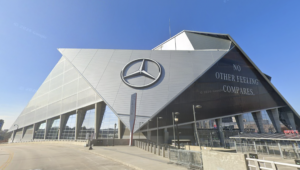
- June 15th
- June 18th
- June 21st
- June 24th
- June 27th
- July 1st
- July 7th
- July 15th
It’s important that if you’re moving through the area or moving your freight in the vicinity of the stadium then you must take note of these dates in preparation of extended transit times.
Atlanta is expecting to see over 300,000 plus visitors at each game. The kick off game on June 15th will test just how prepared Atlanta is for the following events. Freight moving through Downtown Atlanta and around that region should factor in extra lead time. Then for the following games on June 18th and June 21st the risk shifts towards repeated disruption. Where one large event may be manageable, multiple major events in one week can add a ton of pressure to local carriers, and warehouse schedules.
The games on June 24th and June 27th have later kick offs than the others. This means that evening congestion must be accounted for, with 6:00pm and 7:30pm starts, disruption will go on late into the night around the Atlanta metro area. Then onto July 1st and July 7th which are knock-out games, meaning fans will be looking for last minute travel arrangements, hotel stays, etc. Depending on who qualifies depends on the size of crowds too, certain teams consistently draw massive global fanbases and large travelling crowds.
Although, it’s likely that all of these games will be sell outs. Atlanta is already renowned for its traffic congestion, so preparing your customers for additional transit time, potential route closures, reroutes and delays is super important to manage expectations. Watching these key freight lanes closely is critical if you’re planning on moving goods here: I-75, I-85, I-20, I-285 and the Downtown connector.
Miami, FL 🌴
Miami has major freight and tourism markets, which has created an area with high levels of traffic congestion. Now, add in World Cup activity to cruise port traffic, airport traffic, demand from hotels, restaurants, and other tourist areas and we’re talking an incredible amount of added pressure to trucking routes, port freight and wider supply chains. Especially since the Miami stadium is only a 20 minute drive from Downtown Miami and South Beach.
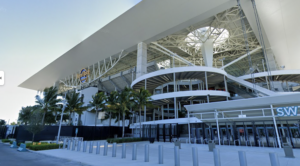
Miami stadium is set to host seven matches. Here are the dates to add to your calendar if you’re moving freight through Southern Florida.
- June 15th
- June 21st
- June 24th
- June 27th
- July 3rd
- July 11th
- July 18th
Major roads to watch and plan around are the: I-95, Florida Turnpike, I-75, Palmetto Expressway, PortMiami routes, and Port Everglades lanes. Shippers moving goods through and around Miami must factor in extra time around match days, as a buffer in case of delays.
New York & New Jersey 🗽
New York/New Jersey is scheduled to host eight World Cup matches, and in fact arguably the most important game will be held here, the final. The city is already surrendering these eight days as gridlock alert days. They’re preparing with major traffic restrictions and expecting heavy congestion through midtown Manhattan on match days, with fans en route to MetLife stadium. Many of the main roads through Midtown will have bus-only, World Cup official vehicles and emergency services restrictions, starting six hours before kick-off and lasting up to three hours after the match ends. Along with this there will also be plenty of road closures around where officials expect heavy crowds.
The city has requested that businesses reschedule any truck deliveries that might be made to and around the area, as there will be delivery restrictions in Midtown from river to river between 30th and 60th street during peak times. If you MUST travel through Midtown via car/truck then add in increased transit times and be ready to remain extremely patient.
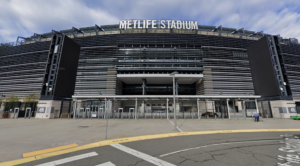
Here are the dates to plan around:
- June 13th
- June 16th
- June 22nd
- June 25th
- June 27th
- June 30th
- July 5th
- July 19th
Some key routes and freight lanes to watch are: I-95, New Jersey Turnpike, I-80, I-78, I-287, Port Newark, Elizabeth, and bridge and tunnel approaches into New York City. All of these regions already struggle with heavy congestion, tolls and limited truck access. The World Cup will most likely enhance these issues.
Philadelphia, PA 🔔
World Cup event traffic will severely strain Philadelphia’s regional freight corridors. Match days at Lincoln Financial Field will trigger gridlock traffic, forcing carriers to alter routing and schedule strategies. Here are the key routes to watch: I-95, I-76, I-676, I-295, and the Pennsylvania Turnpike. Shippers moving goods especially between New York, New Jersey, Delaware, Maryland and Washington D.C. should keep the following six match days in Philadelphia in mind when planning freight movement.

- June 14th
- June 19th
- June 22nd
- June 25th
- June 27th
- July 4th
Notice something in that list, that’s right Philadelphia will be hosting a World Cup match on July 4th. A match day on any other day is one thing to be dealing with, but a match day on July 4th and the 250th year celebration of the U.S. could create chaos. Shippers with no option but to enter this area during this time must avoid tight timeframes, plan reroutes and build in extra transit time.
Boston & Foxborough 🏈
Massachusettes have invested $35 million into upgrades to Foxborough station ahead of th
e World Cup, which could help fans move by rail and reduce pressure on roads near the Gillette stadium. However, shippers should still anticipate congestion around match days. Foxborough is timetabled to host seven games, including a quarter final game on the following dates:
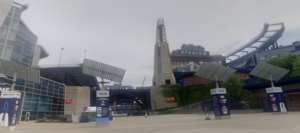
- June 13th
- June 16th
- June 19th
- June 23rd
- June 26th
- June 29th
- July 9th
As the matches will be held in Foxborough, the main freight impacts will be seen regionally rather than downtown. The main freight lanes to watch are: I-95, Route 1, I-495, I-90, and I-93. Freight moving between Boston, Providence, Hartford, and New York could be more prone to facing congestion.
Texas and Central U.S. 🤠
Dallas & Arlington, TX ⭐
Dallas and Arlington are hosting nine World Cup matches, and with Dallas Fort Worth being one of the nations busiest distribution markets, the added activity on the Texas roads from the World Cup could add pressure onto a busy and active trucking region, especially since Dallas are hosting the Semi-final game. Here’s a list of match days in this area:
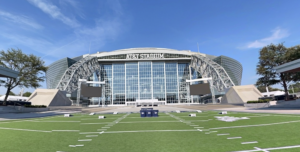
- June 14th
- June 17th
- June 22nd
- June 25th
- June 27th
- June 30th
- July 3rd
- July 6th
- July 14th
The main roads and freight lanes to watch on these dates include: I-20, I-30, I-35E, I-35W, I-45, SH-360 and routes around Dallas Fort Worth Airport. Shippers that move freight between Dallas, Houston, Austin, San Antonio, Oklahoma City, and the Southeast need to watch match day windows closely.
Houston, TX 🚢
Houston is a major freight and distribution hub year round. To put it into perspective, the Port of Houston handles almost 70% of all containerized cargo in the U.S. Gulf and Houston utilizes air, ocean, rail and road networks to move cargo nationally. This summer Houston is set to host seven matches during the World Cup. Here are the key dates to prepare your freight movement around to avoid longer transits:
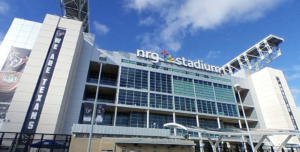
- June 14th
- June 17th
- June 20th
- June 23rd
- June 26th
- June 29th
- July 4th
Again, another July 4th game, which could cause more disruption than any of the other dates. This is an important date in the U.S. anyway, add in World Cup match day crowds and we will probably have heavily congested areas and roads. Here are the main routes to watch: I-10, I-45, I-69, US-59, 610 Loop, Beltway 8, and Port Houston lanes. Moving freight around these dates requires: planning ahead, leaving early, building in extra transit time and staying flexible where possible.
Kansas City, MO 🚂
Road freight is huge in Kansas City, as it’s the second largest intermodal hub in the U.S. Here are some of the more popular roads to watch closely and plan around during the World Cup: I-70, I-35, I-29, and I-49. These roads will be fragile on the following six dates when matches are lined up in KC:
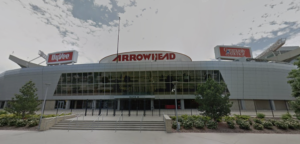
- June 16th
- June 20th
- June 25th
- June 27th
- July 3rd
- July 11th
MoDOT are warning that drivers statewide could experience heavier than usual traffic. To help keep roadways moving, there are plans in place to remove all roadworks to fit the highest capacity possible on the busiest lanes. But, they’re still encouraging truckers to stay out of KC entirely during the World Cup, as high surges in congestion and traffic are expected during the above match days.
West Coast 🌊
Los Angeles & Inglewood, CA 🎬
Commercial vehicles moving through Los Angeles and Inglewood will face: localized road closures, strict delivery restrictions, curfews and road closures around SoFi stadium on match days. These road closures will affect truck movement in one of the most congested freight areas in the U.S. Here are the eight match dates to plan around in the Los Angeles & Inglewood area:
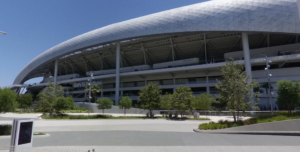
- June 12th
- June 15th
- June 18th
- June 21st
- June 25th
- June 28th
- July 2nd
- July 10th
During these dates, there are key freight lanes to watch including: I-405, I-105, I-110, I-10, I-5, LAX roads, Port of Los Angeles, Port of Long Beach and Inland Empire warehouse routes.
San Fransisco Bay & Santa Clara, CA 🌉
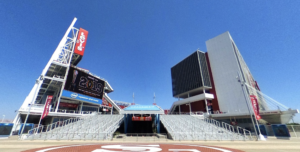
San Fransisco Bay Area stadium is set to host six World Cup matches, on the following dates:
- June 13th
- June 16th
- June 19th
- June 22nd
- June 25th
- July 1st
The region already struggles with heavy commuter traffic. With the World Cup around the corner we’re going to see road closures and detours put in place near the stadium in Santa Clara including the closures of: Tasman Drive, Stars and Stripes Drive and detours will send drivers down Great America Way, Great America Parkway, Lafayette Street, Calle De Luna, and Calle Del Sol and regional detours to Highways 101, 237 and local roads. These closures are all “phase 1” closures so check the dates and times of these when moving through these areas. There is also a “phase 2” closure on Calle Del Sol at different times on match dates, being redirected to Lick Mill Boulevard. Other key routes to watch: US-101, I-880, I-680, I-280, CA-237, Port of Oakland lanes and the San Jose area.
Seattle, WA ☕️
Seattle is an important Pacific gateway port. With Lumen Field stadium in close proximity of the Seattle port, and downtown we’re expecting major disruptions to freight movement around the port, rail terminals and further afield.

Here are Seattle’s match dates:
- June 15th
- June 19th
- June 24th
- June 26th
- July 1st
- July 6th
On and around these dates it’s important to closely watch the following routes: I-5, I-90, SR-99, Port of Seattle routes, Port of Tacoma lanes, and regional distribution lanes between Seattle, Tacoma and the wider Pacific Northwest. In particular I-5 is an important North-South corridor, meaning delays in Seattle could also affect movement into Oregon, British Columbia, and inland Washington.
Conclusion 💭
The World Cup will not cause freight delays everywhere. But, match days and surrounding periods could create a large amount of pressure in the host cities, on popular roads and across busy freight lanes. Especially since one third of the matches are being played on weekdays, leaving fans to compete with daily commuters on roadways. Not to mention, June and July are already also classed as peak shipping season for U.S. domestic freight. Therefore, shippers must carefully watch local and national markets as Atlanta, Dallas, Houston, Miami, LA, New York and Seattle are all major freight hubs. Add in World Cup activity and timings and capacity may become a lot more sensitive.
We’re in for a very busy month across the states with the hosting of some of the World Cup games. These kind of events bring massive traffic disruptions, significant challenges for transportation networks and gridlocks. The smartest approach to beat game day is to plan, identify exposed routes, and avoid last minute freight decisions. If you’re concerned about freight delays during the World Cup, then our expert freight teams can help you to review your lanes and plan around match days and keep your freight moving during one of the busiest periods of our summer. We’d love to help, get in touch via cell on: 888-SHIP-911 or use the link below. ⬇️
Need help with any of your specialized shipments?
Today can be the day you stop struggling with your logistics problems.
At PEI we’re experts in dealing with specialized freight and can handle yours with any custom requirements.
