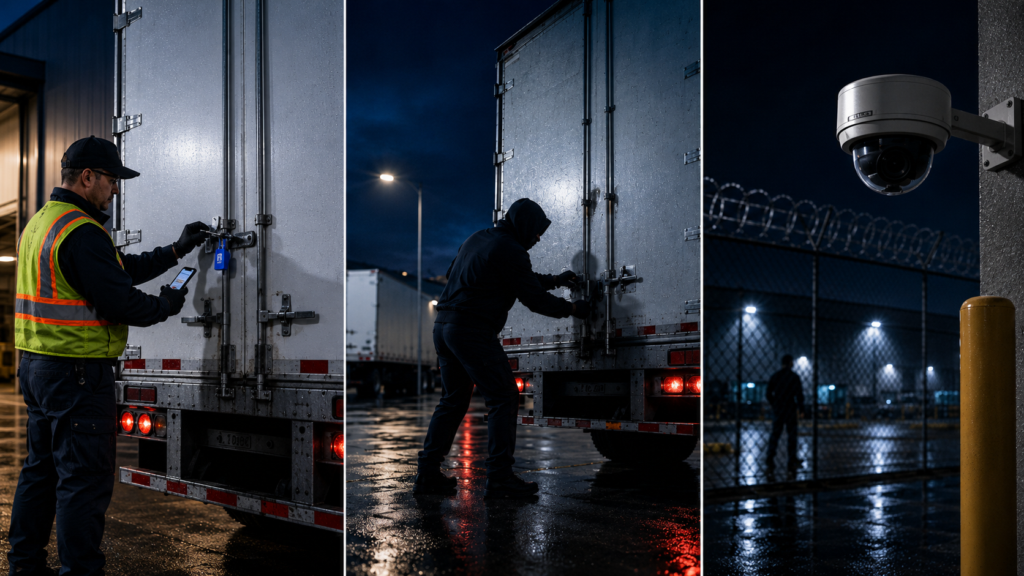
Cargo theft in the US has become a serious and costly problem across the freight industry. And the number of reported instances just keep on rising. While crimes of the opportunistic nature do still happen, for the most part, cargo theft seems to have shifted away from traditional smash and grab break ins and is now predominantly centered around organized crime circles carefully selecting valuable loads, identifying vulnerable locations and acting when the freight is least protected.
Vulnerable freight can be targeted at almost any point before and during movement, including at warehouses, loading docks, truck stops, unsecure parking areas and delivery locations. Also, it’s not uncommon for only part of a shipment to be stolen, in some cases an entire load might be taken but in many cases, these thieves might only steal an individual pallet or small quantity. This often goes unnoticed until the shipment reaches its destination and is counted. By that point, it makes it much more difficult to find the perpetrator.
For shippers, the impact extends well beyond the value of the stolen goods. They’re hit with knock on effects like delays, disruptions to production schedules, etc. which we will get into further in this blog. But if we can help shippers to understand when cargo is at its most vulnerable, which types of shipments are regularly targeted by these criminals, and what preventative measures can be put in place to protect goods throughout the supply chain, then we can work together to tackle freight theft head on.
How Much Does Cargo Theft Cost The US?
Cargo theft in the previous year of 2025 surged to $725 million of losses in the United States and Canada, which is a huge 60% surge from 2024, scary numbers right?! But, these are just the instances we know about, a ton of incidents go unreported. Government agencies like U.S. Immigration and Customs Enforcement (ICE) and National Insurance Crime Bureau estimate that the true annual cost of cargo theft could be more like $15 – $35 billion. These figures make it one of the most expensive forms of property crime. Because, like we mentioned not only do a lot of these incidents go unreported, but also the true knock on cost takes into account the amount of money lost through the entire supply chain when freight is stolen. In most cases only the shipments value is considered.
But when goods are stolen, replacements are needed, doubling the outlay on good, and that replacement shipment needs to move again, causing delays, doubling the cost to ship, increasing insurance premiums, and impacting relationships. The extra costs don’t stop there either. It’s not only the shipper that is affected, criminal offences like this drive up operational costs for your transportation and logistics partner too. To prevent this sort of criminal activity affecting them and their customers in the future they must invest in additional security and if they’re still unfortunately hit by theft then added expenses come in the form of: managing more insurance claims and dealing with the effects of slower deliveries.
Cargo Theft vs. Freight Fraud
Learning the ins, outs and differences between cargo theft and freight fraud can help shippers to stay ahead of the curve and tackle them both head on. There are three main ways that cargo is frequently stolen including the two below and then the one that involves fraudulant behavior below them:
Cargo Theft
Facility theft: Organized criminal groups often target warehouses and distribution centers, they tend to use insider information to pinpoint high value goods, shipping schedules and route details way before the load even hits the road.
Straight theft: This one includes organized scenarios, using team drivers following targeted loads from distribution centers until the driver is forced to stop to rest. But it can also be opportunistic theft, it often involves slashing trailer tarps or cutting through padlocks at truck stops or parking lots.
Freight Fraud
Freight fraud involves deception within the planning and transportation process, including: carrier impersonation, dodgy double brokering, false documentation, or payment scams. Typically sophisticated criminal syndicates that through impersonation, hijacking load boards and using identity theft, trick brokers and shippers into handing over loads. Once they’re in possession of a shipment they then divert the cargo to a “ghost warehouse”.
So both have the same goal, to steal freight. But freight fraud is more deceptive, with the thieves hiding in plain sight and acting as part of the supply chain, earning trust, and then stealing the shipment when they’re in possession of it.
Major Cargo Theft Hotspots
There is a clear pattern of areas where cargo theft is highly concentrated and they tend to be around areas dense with distribution centers, warehouses, freight hubs and high volume logistics routes. The following are states that have particularly high cargo theft statistics.
California
California ranks in the states as accounting for the highest level of cargo theft. With a huge 36% of all national cargo thefts taking place around Southern California mainly in the region of Los Angeles, Long Beach Port and Inland Empire.
Texas
Texas has the next highest concentration of cargo theft, with 17% of incidents reported here. Dallas Fort Worth and Houston Metropolitan areas tend to be the primary zones for targeted freight heists.
Illinois
Then Illinois follows with 13% of national reports, most often taking place around the Greater Chicago area which seems to be a hotspot for rail and truck cargo thefts.
Tennessee
Tennessee cargo theft sits at around 12% of the nations total with high concentrations of criminal activity taking place around Memphis.
Georgia
Atlanta is a cargo hub, so it’s no wonder it sees criminal activity around the popular freight corridors, giving 4% of the nations cargo theft incidents to Georgia.
New York
New York is emerging as a freight theft hotspot. Although their figures aren’t quite up to California’s or Texas’ caution should be taken when moving freight through the area.
When Does Cargo Theft Happen
Cargo theft happens all year round. However, it does surge during the fourth quarter driven by peak holiday shipping. But also during extended weekends and public holidays, like 4th July and Labor Day and particularly late at night, all of which are seen as attractive opportunities for thieves.
During these periods warehouses, distribution centers and receiving facilities may be closed or operating on skeleton staff. Loaded trailers may also be staged in advance, leaving valuable freight sitting idle and unattended for longer than usual.
However, cargo theft really is not restricted to holiday periods, it can happen at any time, especially at unsecured truck stops, rest areas, roadside, drop lots or poorly monitored parking facilities. Essentially whenever a shipment is stationary for longer than expected. Opportunistic thieves will use any chance they get to steal freight.
What Shipments Are Particularly Targeted?
High value and easily resellable items tend to be primary targets, including pharmaceuticals and electronics, automotive parts and computer equipment.
However, it’s not only expensive goods that are targeted, food, beverages, clothing, shoes, metals, and building materials. As well as large quantities of commonly used products can be just as appealing as a smaller shipment of luxury goods. Loads that can be broken down and sold separately through different channels, may actually be easier for thieves to sell on than one extremely expensive piece.
How Shippers Can Help To Prevent Cargo Theft
There are a number of measures that shippers can put in place to minimize the risks of cargo theft before their goods leave the warehouse or loading dock, these additional security precautions include:
- Don’t leave loaded freight staged at the facility for too long
- Make sure loading docks, storage areas and yards are well lit and monitored in some way.
- Only share shipment details with employees that really need them, i.e. cargo value, routes and pick up times.
- Record necessary information about the truck driver handling your load. Make sure to get the drivers name, truck number, license plate, seal number and departure time.
- Take photographs of the loaded and sealed trailer before it leaves pick up.
- Train warehouse staff to look out for and report suspicious vehicles or unauthorized people near loading areas.
- Create additional checks and procedures for frequently targeted cargo and high value shipments.
- Create a clear cargo theft response plan, so employees know what to do if a shipment is stolen or tampered with.
Security Measures You (The Shipper) Can Request From Your Freight Partner
- Require active GPS tracking and alerts, this way you can monitor unexpected stops, route deviations or trailer-door openings.
- Avoid loading trailers too early, especially if the freight is not moving right away.
- Coordinate pick up and delivery times to reduce waiting and overnight dwell time.
- Establish agree routes, trying to avoid hotspot freight theft areas where possible.
- Ensure trucks arrive already fully fuelled up, to minimize stops when carrying high value freight.
- Ask for team drivers, on very high value shipments, this way there will be less chance of the cargo being left alone at fuel, rest, or food stops.
- Ask carriers to report delays immediately.
- Ask freight partners to report any broken seals, or securements that look to have been tampered with immediately.
- Require carriers to use high security rear door locks, air cuff locks and where necessary landing gear or kingpin locks.
Preventing Cargo Theft That Starts With Deception
We’ve mentioned that not all stolen loads start with an alias breaking into a warehouse or cutting open the tarp of a trailer to access goods. Because freight fraud instead starts with deception to get their hands on a load. Shippers can reduce the risk of freight fraud through thoroughly checking company and contact information through the FMCSA and trusted vetting services.
Driver identities, truck and trailer details and unique tracking or authorization codes should all be confirmed before releasing a shipment. If you run into driver substitutions, changes to delivery plan or last minute contact details, these should always be independently verified. Always take extra care also when using online load boards or shipping with a new freight partner for the first time.
What Should Shippers Do If Their Cargo Is Stolen
When cargo is stolen the most important thing is to act quickly, this improves your chances of recovering a load before it is separated or resold.
Immediately contact law enforcement, and your insurance provider. Gather all of the GPS records, route history, door alerts and the shipment’s last known location. Other important documents to pull together that may be requested for further investigation include: bill of lading, seal records, driver details, truck and trailer numbers, license plates, and photographs taken during loading before departure. And of course, any surveillance footage would be great to obtain before it is overwritten.
Inform any customers waiting on delivery of the theft, and keep them updated on delays and replacement arrangements. Then once the immediate reports and investigations are underway, work closely with your team and freight partners to identify weaknesses in the shipping process that enabled this to happen. Doing this can help you to identify security measures that need to be revisited and strengthened.
PEI Can Help
Unfortunately cargo theft cannot be completely prevented, but careful planning can make your freight significantly more difficult to target. The best ways to minimize exposure to theft are route planning to avoid known hotspots, secure parking, not leaving trucks idle and real time tracking tools.
At PEI we work closely with you, the shipper to plan reliable freight moves in the safest way possible. For any of your valuable, sensitive or time critical shipments speak to one of our team members about what security and additional precautions may be appropriate and can be put in place for your loads. You can contact us directly on: 888-SHIP-911 or by using the link below to get some advice or to book a load with us. 😊⬇️
Both cargo theft and freight fraud often overlap, but to tackle each of them they require different preventative measures. We have covered freight fraud in depth in other previous blogs, to read more about it, click through here ➡️ Freight Fraud
Need help planning a shipment?
Talk with PEI about expedited freight, specialized freight, or your next shipping challenge.
