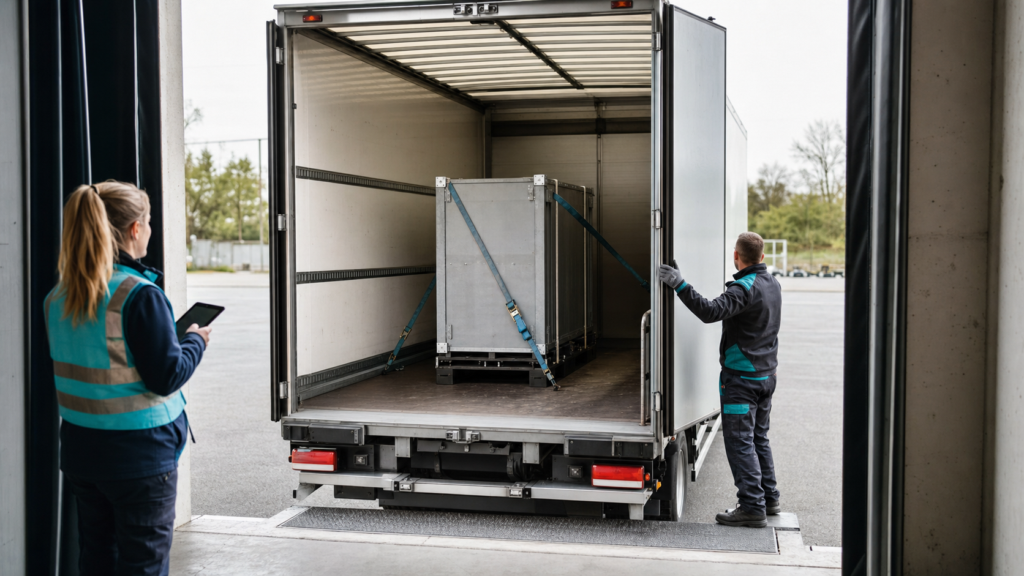
If you need a shipment to arrive at a precise date and time with zero handling between pickup and delivery, exclusive use vehicle shipping is your answer. Specialized expedited freight providers assign a dedicated truck to your cargo alone, meaning it goes straight through with no stops, no transfers and no shared space. You get real-time tracking, direct communication and the kind of control that standard freight simply can't offer. It costs more, but when timing is everything, it's the service that keeps your operation running.
Authoritative Frameworks Referenced: The U.S. Department of Transportation's Benefit-Cost Analysis framework provides a systematic way to determine when the premium cost of exclusive use shipping is justified by the potential cost of delay. The logistics industry's On-Time In-Full (OTIF) metric, which measures the percentage of deliveries completed on or before the promised time with full quantity, is the standard performance benchmark for evaluating these services. Additionally, the time-critical logistics service spectrum model helps shippers scale their service intensity from standard LTL up through full truckload to exclusive use vehicles based on urgency and risk.
What exactly is exclusive use vehicle shipping?
Think of it as chartering a private car on a train, except it's a truck. When you book an exclusive use vehicle, or EUV, the entire truck is dedicated solely to your shipment. No other freight gets loaded on. There are no transfers between terminals, no cross-docking where your cargo sits on a warehouse floor waiting for the next truck and no shared space with someone else's pallets. Your freight goes from pickup to delivery in one sealed vehicle.
This matters because every time cargo gets handled, transferred or consolidated with other shipments, you introduce risk. Risk of damage, risk of delay, risk of miscommunication. With an EUV, you eliminate all of that. The driver picks up your shipment and drives it straight to the destination. You get real-time GPS tracking the entire way, and many providers offer direct communication so you know exactly where your freight is at any moment.
The service is especially valuable when you're dealing with high-value items, appointment-sensitive deliveries or cargo that requires special handling. If you're shipping aerospace engine components, tradeshow exhibits that need to arrive show-ready or industrial equipment that can't afford even a minor delay, EUV shipping gives you the control and reliability that standard freight networks simply aren't designed to provide.
How much does exclusive use shipping cost compared to standard freight?
Here's the honest truth: it costs significantly more. According to industry pricing data, standard U.S. transport costs average between $0.78 and $2.92 per mile depending on distance, and enclosed or specialized transport can add another 30 to 60 percent on top of that.¹ Exclusive use vehicle rates can run two to three times standard freight rates because you're paying for dedicated capacity, meaning the truck isn't earning revenue from any other shipper on that trip.
But cost is only half the equation. The U.S. Department of Transportation's Benefit-Cost Analysis framework encourages shippers to weigh the cost of the premium service against the cost of failure. If a missed delivery means a manufacturing line sits idle, a tradeshow booth doesn't get set up or an aircraft stays grounded, the cost of delay almost always dwarfs the shipping premium. One logistics case study found that software-driven route optimization in automotive parts delivery achieved 96 percent on-time delivery rates while also reducing overall costs.²
So the real question isn't whether EUV shipping costs more. It's whether the consequences of a delayed or damaged shipment cost more than the premium. For mission-critical freight, the math almost always favors the dedicated vehicle.
When should I choose exclusive use over standard shipping?
Not every shipment needs its own truck. Standard freight works perfectly well for routine, non-urgent cargo where a day or two of flexibility is acceptable. But there are specific scenarios where exclusive use shipping becomes the obvious choice, and they all come down to one thing: what happens if this shipment is late or mishandled?
If you're in manufacturing and a production line is down waiting for a replacement part, every hour of downtime bleeds money. If you're an event logistics coordinator and your tradeshow exhibits need to arrive at a marshalling yard by a specific date and time or you miss your installation window, standard freight's "we'll get there when we get there" approach is a non-starter. If you're shipping high-value aerospace components where an aircraft on ground situation means millions in lost revenue per day, the premium for a dedicated truck is a rounding error.
Here's a good rule of thumb: if the cost of the shipment being late exceeds three to five times the shipping premium, exclusive use is worth it. If you're dealing with schedule changes, special handling requirements or cargo that needs communication at pickup and delivery, you want a provider that builds partnerships and understands your specific challenges, not just a carrier that moves boxes.
What types of freight work best with exclusive use vehicles?
The sweet spot for EUV shipping sits at the intersection of urgency, value and complexity. Aerospace parts are a prime example, particularly engine moves and aircraft-on-ground situations where grounded planes cost airlines staggering amounts per hour. These shipments demand priority handling, real-time GPS tracking and expert coordination from pickup to delivery.
Tradeshow and event logistics are another natural fit. Think about it: you've spent months planning a booth, coordinating installers and technicians and your entire marketing investment hinges on everything arriving show-ready at the right place and time. Multi-booth shipments, advanced warehouse deliveries, direct-to-show moves and marshalling yard coordination all benefit from the precision of a dedicated vehicle. When schedules change at the last minute, and they always do, you need a provider that can react without the whole process falling apart.
Industrial and specialized freight rounds out the picture. Oversized equipment on step-deck, RGN, lowboy or Conestoga trailers. Heavy machinery for construction, mining, energy or manufacturing operations. High-value items that need to be secured right and delivered without the handling risks that come with shared freight networks. The global automotive logistics market alone is projected to grow from $314 billion in 2025 to $603 billion by 2034, reflecting just how much demand exists for reliable, specialized transport.³
What vehicle types are used for exclusive use shipments?
Flexibility in vehicle selection is one of the biggest advantages of working with a dedicated expedited provider. Depending on the size, weight and urgency of your shipment, you might use anything from a cargo van or sprinter truck for smaller, ultra-urgent loads to a straight truck for mid-size freight to a full 53-foot truckload for larger shipments. Hot shot deliveries, which use smaller, faster vehicles for time-critical loads, are particularly common for emergency freight recovery situations.
For specialized and non-standard freight, the equipment options expand considerably. Step-deck trailers handle tall cargo that won't fit under standard trailer height limits. RGN (removable gooseneck) and lowboy trailers accommodate heavy equipment that needs to be driven or rolled onto the trailer. Conestoga trailers offer the weather protection of an enclosed trailer with the loading flexibility of a flatbed. Extendable trailers handle oversized lengths.
The key is matching the right vehicle to your specific cargo. A good expedited provider doesn't just dispatch the first available truck. They assess your freight dimensions, weight, handling requirements and delivery timeline, then select the vehicle type that gives you the best combination of speed, safety and cost efficiency.
How do I pick the right exclusive use shipping provider?
With over 7,000 companies operating in vehicle shipping services, choosing the right provider can feel overwhelming.¹ But the selection process gets much simpler when you focus on a few critical factors rather than just comparing price quotes.
First, look for responsiveness and communication. In time-critical shipping, the speed of the quote and dispatch process matters almost as much as the transit time itself. Can the provider give you a fast quote, dispatch quickly and keep you updated with real-time tracking throughout the move? Do they communicate proactively at pickup and delivery, or do you have to chase them for updates? The best providers treat your emergency as their priority and maintain seamless communication from first call to final delivery.
Second, evaluate their approach to partnerships versus transactions. Providers who take the time to understand your specific operational challenges, your industry's pain points and your scheduling patterns will consistently outperform those who just move freight. When a schedule changes at the last minute, a partner who knows your business can react and adjust the entire process. A transactional carrier just tells you it'll cost extra. Look for providers who are dependable, reliable, honest and who demonstrate that they genuinely care about your outcomes, not just their invoice.
What are the limitations of exclusive use vehicle shipping?
It's important to go in with realistic expectations. The most obvious limitation is cost. Per-mile rates for exclusive use can run two to three times standard rates, which means this service makes financial sense primarily for high-value or mission-critical shipments where delay costs exceed the shipping premium. If you're shipping routine, non-urgent freight with flexible delivery windows, you're paying a significant premium for speed and control you don't actually need.
Geographic and modal limitations also come into play. Not all providers offer true door-to-door exclusive use service across every region or transport mode. If your shipment requires multimodal coordination, say a ground leg followed by air freight, maintaining exclusive use continuity across those handoffs can be challenging and may require coordination across multiple providers, which can dilute some of the control benefits you're paying for.
Regulatory complexity adds another layer. Different cargo types face varying regulatory requirements, from basic Federal Motor Carrier Safety Administration insurance standards to specialized rules. The U.S. Nuclear Regulatory Commission, for example, sets specific radiation dose limits for exclusive use shipments of radioactive materials, including limits of 10 millirem per hour at 2 meters from the vehicle surface.⁴ While most commercial shippers won't deal with that level of regulatory scrutiny, it illustrates how cargo characteristics can significantly affect the logistics planning process. Also note that most expedited providers don't handle hazardous materials due to insurance requirements, so if your freight falls into that category, your options narrow considerably.
Key Takeaways
- Exclusive use vehicle shipping means one shipment, one truck, no transfers or delays.
- EUV costs two to three times standard rates but prevents far costlier downtime.
- Best suited for aerospace, tradeshow, manufacturing and high-value freight.
- Provider responsiveness and communication matter as much as transit speed.
- Always weigh the shipping premium against the true cost of a missed delivery.
About This Topic
Exclusive use vehicle shipping is a premium logistics service where an entire truck is dedicated to a single shipper's cargo for time-critical deliveries. Unlike standard freight that consolidates multiple shipments, EUV provides direct, no-transfer transport with real-time tracking and precise scheduling. The service is commonly used in aerospace, tradeshow logistics, manufacturing emergency recovery and specialized freight transport where the cost of delay or damage far exceeds the shipping premium.
Comparative Analysis Table
| Factor | Option A | Option B | Notes |
|---|---|---|---|
| Cargo handling | Standard LTL or shared freight: multiple touches, transfers, and cross-docking | Exclusive use vehicle: single load, sealed truck, no intermediate handling | EUV is preferable when cargo is fragile, high-value, or requires special handling |
| Transit time | Standard freight: 3 to 7 business days with variable scheduling | Exclusive use: same-day, next-day, or date-and-time-specific delivery | EUV is essential when delivery windows are non-negotiable |
| Cost per shipment | Standard freight: lower per-mile rates shared across multiple shippers | Exclusive use: 2 to 3 times standard rates for dedicated capacity | Standard is better for routine freight; EUV justified when delay costs exceed the premium |
| Visibility and tracking | Standard freight: periodic updates, limited real-time visibility | Exclusive use: real-time GPS tracking with direct driver communication | EUV preferred when stakeholders need constant shipment status updates |
| Schedule flexibility | Standard freight: fixed schedules, limited ability to accommodate changes | Exclusive use: can react to last-minute schedule changes without disrupting other loads | EUV is ideal for tradeshow logistics and event moves where schedules shift frequently |
| Damage risk | Standard freight: higher risk from multiple handling points and shared space | Exclusive use: minimal risk with single-load, no-transfer approach | EUV strongly preferred for show-ready exhibits, precision equipment, and irreplaceable items |
How to Implement
-
Assess Your Shipment Urgency and Risk
Start by calculating the true cost of a delayed or damaged delivery. Factor in production downtime, missed event windows, contractual penalties and reputational impact. If the cost of failure exceeds three to five times the shipping premium, exclusive use is the right call.
-
Define Your Exact Delivery Requirements
Specify the pickup and delivery dates, times and locations. Note any special handling needs, communication requirements at pickup or delivery and whether installers or technicians need to be coordinated on the receiving end. The more detail you provide upfront, the smoother the execution.
-
Select the Right Vehicle Type for Your Cargo
Match your freight dimensions, weight and handling requirements to the appropriate vehicle. Cargo vans and sprinters work for small urgent loads. Straight trucks handle mid-size freight. Full truckloads, step-decks, RGNs and specialty trailers accommodate larger or non-standard shipments.
-
Choose a Provider Based on Responsiveness and Partnership
Request quotes from providers who specialize in expedited and time-critical freight. Evaluate them on quote speed, dispatch capabilities, real-time tracking technology and their willingness to understand your specific operational challenges. Prioritize providers who build partnerships over those who just process transactions.
-
Confirm Tracking, Communication and Contingency Plans
Before dispatching, confirm that you'll have real-time GPS tracking, a direct communication channel for updates and a clear plan for handling schedule changes or unexpected issues en route. Make sure the provider can react quickly without disrupting the entire process.
Troubleshooting FAQs
What happens if my delivery schedule changes after the truck is already dispatched?
This is one of the key advantages of working with a dedicated expedited provider rather than a standard freight network. Because the truck is exclusively assigned to your shipment, schedule adjustments are far easier to accommodate. A good provider will react quickly to reroute or adjust timing without the cascading disruptions that schedule changes cause in shared freight networks. The key is working with a provider who has built a partnership with you and understands your operational patterns, so they can anticipate and adapt rather than just charge you a change fee.
How do I know my shipment is actually getting exclusive use treatment and not being consolidated?
Real-time GPS tracking is your verification tool. With a true exclusive use vehicle, you should be able to see your shipment's location at any point during transit and confirm that the truck is traveling directly from pickup to delivery without detours to other pickup or delivery stops. Ask your provider for continuous tracking access and direct communication with the driver or dispatch team. If a provider can't offer this level of visibility, that's a red flag that your shipment may not be getting the dedicated treatment you're paying for.
Implementation Stories
Best Practices Checklist
- Calculate the true cost of delay before deciding between standard and exclusive use shipping.
- Provide detailed pickup and delivery requirements, including special handling and on-site coordination needs, before dispatch.
- Confirm real-time GPS tracking and direct communication access with every exclusive use booking.
- Build an ongoing partnership with your expedited provider so they understand your operational patterns and can react faster when urgency strikes.
- Document delivery performance using On-Time In-Full metrics to evaluate provider reliability over time.
- Have a pre-vetted exclusive use provider relationship in place before emergencies happen, not after.
Glossary
| Term | Definition |
|---|---|
| Exclusive Use Vehicle (EUV) | A shipping arrangement where an entire truck is dedicated to a single shipper's cargo, with no other freight loaded, no transfers, and no cross-docking between pickup and delivery. |
| Hot Shot Delivery | An expedited shipping method using smaller, faster vehicles like sprinter trucks or cargo vans to deliver urgent, time-critical freight as quickly as possible. |
| On-Time In-Full (OTIF) | A logistics performance metric that measures the percentage of deliveries completed on or before the promised time with the full quantity ordered. Calculated by dividing on-time, complete deliveries by total delivery attempts. |
| Cross-Docking | A logistics practice where freight is unloaded from one truck and loaded onto another at a terminal, often causing delays and additional handling risk. Exclusive use shipping eliminates this step entirely. |
| Marshalling Yard | A designated staging area near a tradeshow or event venue where freight is received, organized, and scheduled for delivery to the show floor during assigned move-in windows. |
References
- Shiply. "Car Shipping Quotes – Compare Auto Transport Companies". Shiply. Accessed July 1, 2026. https://www.shiply.com/us/car-shipping.
- nuVizz Inc. "Improving Automotive Parts Delivery". nuVizz Inc. Accessed July 1, 2026. https://nuvizz.com/blog/improving-automotive-parts-delivery/.
- Fortune Business Insights. "Automotive Logistics Market Size, Share & Trends Report, 2034". Fortune Business Insights. 2025. https://www.fortunebusinessinsights.com/automotive-logistics-market-105662.
- U.S. Nuclear Regulatory Commission. "Guidance on Exclusive-Use Shipments". U.S. Nuclear Regulatory Commission. January 1, 2024. https://www.nrc.gov/reading-rm/doc-collections/gen-comm/info-notices/1980/in80032.
Need help planning a shipment?
Talk with PEI about expedited freight, specialized freight, or your next shipping challenge.
