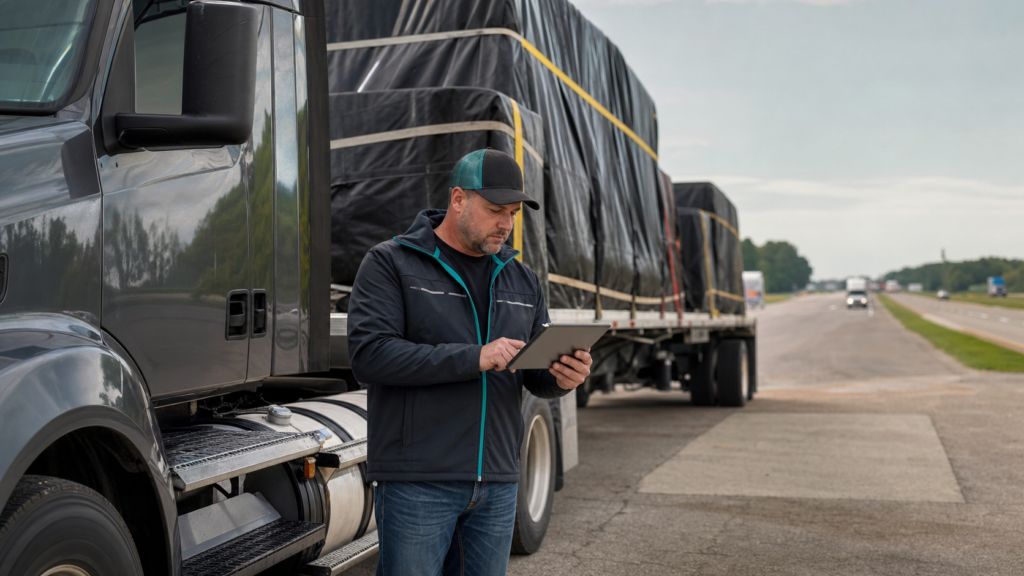
When a critical shipment fails, gets delayed or a production line goes down, you need a provider that can mobilize immediately and move freight on a dedicated vehicle with no transfers and no delays. Nationwide emergency freight recovery companies specialize in exactly this, operating 24/7/365 with sprinter trucks, cargo vans, straight trucks and full truckloads ready to dispatch at a moment's notice. These aren't your standard freight brokers. They're built for the shipments that regular carriers won't touch or can't prioritize, and they typically have you covered from quote to delivery in a fraction of the time you'd expect.
Authoritative Frameworks Referenced: The Disaster Management Lifecycle framework, which covers prevention, preparedness, response and recovery phases, directly applies to how emergency freight recovery providers structure their operations. Additionally, the Logistics Emergency Team framework established by the World Economic Forum in 2005 demonstrates how private sector logistics assets can be rapidly mobilized during crisis situations, a model that commercial emergency freight providers have adapted for industrial and corporate supply chain disruptions.
What exactly is emergency freight recovery?
Think of it this way: your shipment is already in transit, and something goes wrong. Maybe the original carrier breaks down, misses a critical deadline or simply can't complete the delivery. Emergency freight recovery is the service that swoops in, picks up that stranded or at-risk freight and gets it where it needs to be as fast as physically possible. It's not the same as standard expedited shipping, where you're just paying for a faster lane from the start.
The key distinction is urgency and flexibility. Emergency recovery providers dispatch dedicated vehicles, often within minutes of your call and that truck carries only your freight. No cross-docking, no transfers, no consolidation with other shipments. You get a sealed vehicle running straight through to your destination with real-time GPS tracking the entire way. According to Mobility Foresights, the global time-critical logistics market is projected to reach $16.7 billion by 2031, growing at a compound annual growth rate of 7.0%, which tells you just how much demand exists for these services.¹
The types of situations that trigger a recovery call vary widely. It could be an aerospace company with an aircraft-on-ground situation needing engine parts immediately, a tradeshow exhibitor whose booth materials are stuck at a terminal 500 miles from the convention center or a manufacturer facing a line-down scenario where every hour of delay costs tens of thousands of dollars. If you're in any of those situations, a standard carrier's next-day service simply won't cut it.
How fast can emergency freight companies actually respond?
Speed is the entire value proposition here. The best nationwide providers operate 24/7/365 dispatch operations, meaning you can call at 2 a.m. on a holiday and get a live person who can quote, dispatch and have a vehicle rolling within an hour or less. That's not marketing fluff; it's the operational standard for companies that have built their entire business around urgency. Fast quote and fast dispatch capabilities are what separate true emergency providers from standard brokers who happen to offer expedited options.
Once the vehicle is rolling, delivery speed depends on distance and the type of equipment needed. A sprinter truck or cargo van can be dispatched for smaller critical shipments, while straight trucks and full truckloads handle larger freight. Because these are exclusive use vehicles running direct with no stops, a 500-mile emergency recovery might take 8 to 10 hours door to door. Compare that to a standard less-than-truckload carrier that might take three to five business days with multiple terminal transfers along the way.
Here's the thing that really matters though: speed without communication is worthless in an emergency. The providers worth their salt give you real-time GPS tracking and proactive updates throughout the move. You shouldn't have to chase down your provider for status. They should be calling you with updates, especially at pickup and delivery where specific communication or coordination is often required.
How much more does emergency freight cost than regular shipping?
You're going to pay a premium, and you should expect that going in. According to industry analysis from freight market observers, emergency shipments typically cost two to five times standard rates due to on-demand operations without scheduled lanes.² That means a shipment that might normally cost $1,500 through a standard carrier could run $3,000 to $7,500 as an emergency recovery. The exact multiplier depends on distance, vehicle type, time of day and how quickly you need the truck dispatched.
Why so much more? Because you're paying for a dedicated vehicle that carries only your freight, a driver who may be pulled from rest or redirected from another assignment and the operational infrastructure to coordinate all of this at any hour of any day. There are no economies of scale when one truck moves one shipment on one mission. You're essentially chartering a private freight service.
That said, the cost conversation changes completely when you factor in what's at stake. If you're a manufacturer losing $15,000 per hour in downtime, spending an extra $5,000 on emergency freight to get a critical part delivered 18 hours sooner is one of the easiest financial decisions you'll ever make. If you're an exhibitor who paid $50,000 for a tradeshow booth and your materials don't arrive, the cost of emergency recovery is a rounding error compared to the lost investment. The real question isn't whether emergency freight is expensive. It's whether the alternative of waiting is more expensive.
What types of shipments need emergency freight recovery?
The list is broader than most people realize. Manufacturing line-down situations are probably the most common trigger. When a production line stops because a critical component didn't arrive, every minute of downtime translates directly to lost revenue. Aerospace is another big one, particularly aircraft-on-ground scenarios where grounded planes need priority parts delivered with expert handling to minimize downtime. These are high-stakes, high-value moves where the freight itself might be worth hundreds of thousands of dollars.
Tradeshow and event logistics generate a surprising volume of emergency recovery calls. Picture this: a company has spent months preparing a multi-booth exhibit for a major industry event, and two days before setup begins, the carrier reports a delay. The show doesn't move its opening date because your freight is late. That's where emergency recovery comes in, getting show-ready deliveries to the convention center, marshalling yard or advanced warehouse on time. Schedule changes are common in event logistics, and the ability to react quickly when plans shift is what separates a successful show from a disaster.
Beyond those, you'll find emergency recovery handling high-value equipment moves, date-and-time-specific deliveries where appointment windows are non-negotiable and specialized cargo that requires particular handling or communication at pickup and delivery. If you're dealing with anything where a standard carrier would say "we'll get to it when we get to it," that's exactly the kind of freight that needs a dedicated emergency provider.
What should I look for in an emergency freight provider?
Start with responsiveness, because everything else is irrelevant if they can't pick up the phone and give you a quote when you're in crisis mode. A provider that takes hours to return your call isn't an emergency service; it's just a freight broker with an after-hours voicemail. You want a team that answers live, 24/7/365 and can move from quote to dispatch without bureaucratic delays. Quick response time with added convenience in scheduling and options is the baseline, not a bonus feature.
Next, look at their communication throughout the process. Real-time GPS tracking should be standard, not an upgrade. But tracking alone isn't enough. You want proactive communication, meaning the provider calls you with updates rather than waiting for you to ask. This is especially critical for shipments requiring specific coordination at pickup or delivery, like tradeshow installations where you're meeting installers or technicians on-site.
Finally, evaluate their experience with non-standard freight. The U.S. emergency management services market was valued at $43.3 billion in 2026 and is projected to reach $63.4 billion by 2033, according to Persistence Market Research.³ That growth means more providers are entering the space, but not all of them have the depth of experience to handle truly complex situations. Ask about their vehicle fleet options, from cargo vans and sprinter trucks to straight trucks and full truckloads. Ask about their history with your specific type of freight. And ask what happens when the plan changes mid-transit, because in emergency freight, it almost always does. A provider built on partnerships rather than transactions will understand your issues before you have to explain them.
Can emergency providers handle specialized or oversized cargo?
Some can, and some absolutely cannot, so this is a critical question to ask upfront. Specialized freight often requires specific equipment like step-deck trailers, RGN (removable gooseneck) trailers, lowboys, Conestoga trailers or extendable flatbeds. Not every emergency provider has access to this equipment on short notice, and dispatching the wrong trailer type for an oversized or overweight load can turn your emergency into a bigger emergency.
If you're moving industrial equipment, construction machinery, heavy manufacturing components or anything in the energy and mining sectors, you need a provider with demonstrated experience in permit services, route planning for oversized loads and securing freight properly for transit. Complex freight requires problem-solving capability, not just truck availability. The provider should be able to assess your load specifications, recommend the right equipment and coordinate any required permits or escorts before the wheels start turning.
Here's an important caveat though: certain cargo types fall outside what even specialized emergency providers can handle. Hazardous materials, for example, require specific insurance coverage and certifications that many expedited carriers don't maintain. If you're shipping hazmat freight in an emergency, you'll need to verify that the provider carries the appropriate insurance and has drivers with the required endorsements. Being upfront about your cargo's characteristics from the first phone call saves everyone time and prevents dangerous mismatches between your freight and the carrier's capabilities.
Do emergency freight services work for Canada and Mexico?
Ground moves into Canada and Mexico are generally within the capabilities of nationwide emergency freight providers, and many don't consider cross-border ground transportation to be "international" in the traditional sense. It's still a truck moving freight across a land border, albeit with customs documentation requirements. If you're dealing with a time-critical ground shipment that needs to cross into Canada or Mexico, most established providers can coordinate the move including border crossing logistics.
That said, true international freight, meaning air freight across oceans or shipments to destinations beyond North America, is a different animal entirely. Many domestic emergency freight providers don't operate in that space, and for good reason. International air freight involves different regulatory frameworks, customs brokerage relationships and carrier networks that require specialized expertise. If you need emergency international logistics, you're likely looking at a different type of provider.
For inbound international freight that's already landed at a domestic port or airport, emergency providers can absolutely handle the final mile delivery from the hub to your final destination. This is actually a common scenario: freight arrives from overseas on schedule but then gets stuck in domestic transit. An emergency recovery provider picks it up at the local hub and delivers it same-day, next-day or second-day depending on your needs. It's your domestic solution for freight that started its journey internationally.
When might emergency freight recovery not be worth the cost?
Let's be honest: emergency freight isn't always the right call, and a good provider will actually tell you that. If your shipment is delayed but the downstream impact is minimal, say a non-critical inventory replenishment that's a day behind schedule, paying two to five times the standard rate doesn't make financial sense.² The premium is justified only when the cost of delay exceeds the cost of the emergency service and that math doesn't always work out.
Capacity constraints are another reality to consider. According to Markets and Markets, the global incident and emergency management market is projected to grow from $137.45 billion in 2024 to $196.20 billion by 2030.⁴ But during widespread disasters affecting multiple regions simultaneously, even the best nationwide providers may face equipment and driver shortages. If a hurricane has disrupted freight across three states, every available truck in the region is already committed. Your emergency competes with everyone else's emergency, and response times may stretch well beyond normal.
There's also the technology gap to be aware of. Not all providers deliver the same level of visibility. Some advertise real-time tracking but actually provide only periodic check-call updates rather than continuous GPS monitoring. For high-value shipments requiring constant security verification, that difference matters enormously. Before you commit, ask specifically what "real-time tracking" means to them and verify that their technology matches your expectations. If you're moving a $200,000 piece of equipment, you don't want to discover mid-transit that "tracking" means a phone call every four hours.
Key Takeaways
- Emergency freight recovery typically costs two to five times standard shipping rates.
- The best providers dispatch dedicated vehicles within an hour, 24/7/365.
- One shipment, one truck, one mission eliminates transfer delays and damage risk.
- Real-time GPS tracking and proactive communication are non-negotiable standards.
- The cost of emergency freight almost always pales against the cost of downtime.
About This Topic
Emergency freight recovery services are specialized logistics operations that rescue stranded, delayed or at-risk shipments and deliver them on dedicated vehicles with maximum speed and communication. These services operate 24/7/365 and are designed for situations where standard carriers cannot meet critical deadlines, including manufacturing line-down scenarios, tradeshow deliveries, aerospace parts moves and high-value specialized cargo. The time-critical logistics market is growing rapidly as supply chains become more complex and the cost of disruption continues to rise across industries.
Comparative Analysis Table
| Factor | Option A | Option B | Notes |
|---|---|---|---|
| Response Time | Standard Expedited Carrier: Next-day or scheduled pickup windows, typically during business hours | Emergency Freight Recovery Provider: Dispatch within minutes to one hour, available 24/7/365 including holidays | Emergency providers are essential when the delay is measured in hours, not days |
| Vehicle Dedication | Standard Expedited Carrier: Freight may share truck space or transfer between terminals | Emergency Freight Recovery Provider: Exclusive use vehicle with no cross-docking, no transfers, and no co-loading | Exclusive use vehicles are critical for high-value, time-sensitive, or fragile freight |
| Cost | Standard Expedited Carrier: Standard market rates with modest expedite surcharges | Emergency Freight Recovery Provider: Two to five times standard rates due to on-demand, dedicated operations | Emergency rates are justified only when downtime or missed deadlines cost more than the shipping premium |
| Communication and Tracking | Standard Expedited Carrier: Periodic updates via online portal, limited after-hours support | Emergency Freight Recovery Provider: Continuous GPS tracking with proactive phone updates at key milestones | Proactive communication matters most for shipments requiring coordination at pickup or delivery |
| Schedule Flexibility | Standard Expedited Carrier: Fixed pickup and delivery windows with limited ability to adjust mid-transit | Emergency Freight Recovery Provider: Full flexibility to change schedules, reroute, or adjust delivery requirements in real time | If your plans change frequently, as in tradeshow logistics, flexibility is a must-have |
| Cargo Specialization | Standard Expedited Carrier: Handles standard palletized freight within weight and dimension norms | Emergency Freight Recovery Provider: Equipped for non-standard cargo including oversized, high-value, and special-handling shipments | Verify specific equipment availability for specialized loads before committing to any provider |
How to Implement
-
Assess the True Cost of Delay Before Calling Anyone
Calculate your hourly downtime cost, missed-event penalty or production impact so you can make an informed decision about whether emergency freight is justified for this specific situation.
-
Gather Your Shipment Details Before You Pick up the Phone
Know the exact pickup location, destination, freight dimensions and weight, any special handling requirements and your absolute latest acceptable delivery time. The faster you communicate this, the faster a provider can dispatch.
-
Call the Provider Directly Rather Than Submitting an Online Form
Emergency freight is a phone business. Ask for a live quote, confirm vehicle type and estimated transit time and verify their real-time tracking capabilities before authorizing the move.
-
Confirm Communication Protocols Upfront
Specify how often you want updates, who should receive them and what information is required at pickup and delivery. If installers or technicians need to be met on-site, make sure the provider understands coordination requirements before dispatch.
-
Request Proof of Insurance and Verify Coverage Limits Match Your Cargo Value
This is especially important for high-value moves in aerospace, manufacturing or specialized equipment. Don't assume coverage; ask for documentation.
-
Debrief After Delivery to Build a Relationship for Next Time
The best emergency freight outcomes come from providers who already understand your business. Share what worked, what didn't and what your typical emergency scenarios look like so they can respond even faster in the future.
Troubleshooting FAQs
What if my emergency shipment needs to change destination mid-transit?
This happens more often than you'd think, especially in tradeshow and event logistics where venue details or delivery windows shift at the last minute. A quality emergency freight provider builds flexibility into every move. Because your freight is on a dedicated, exclusive use vehicle with real-time GPS tracking, rerouting is operationally straightforward. Call your provider immediately with the new destination and any updated delivery requirements. Since there's no other freight on the truck and no terminal transfers to coordinate, the driver can adjust the route in real time. The key is having a provider that treats schedule changes as normal business rather than an inconvenience.
What happens if the emergency provider's truck breaks down during my critical delivery?
Mechanical failures happen, and a reputable provider has contingency plans built into their operations. Nationwide providers with multiple office locations and extensive carrier networks can dispatch a replacement vehicle to meet the original truck and transfer your freight with minimal delay. This is one reason why choosing a provider with national reach matters over a single-truck operator. Ask about their backup protocols during your initial call. A provider that has been in business for decades will have encountered this scenario many times and should be able to explain exactly how they handle it, including how quickly a backup vehicle can reach the stranded freight.
Implementation Stories
Best Practices Checklist
- Identify your emergency freight provider before you have an emergency, so you already have a relationship and account set up when the crisis hits.
- Calculate your hourly cost of downtime for each critical operation so you can make instant go or no-go decisions on emergency freight spending.
- Maintain a current list of your most common emergency shipment profiles including dimensions, weights, origin locations and typical destinations.
- Require continuous GPS tracking and proactive communication as standard terms in any emergency freight agreement, not optional add-ons.
- Verify insurance coverage limits annually and ensure they match the maximum value of freight you might need to ship in an emergency.
- Conduct a post-delivery review after every emergency move to strengthen the provider relationship and improve response time for future incidents.
Glossary
| Term | Definition |
|---|---|
| Exclusive Use Vehicle (EUV) | A truck or van dedicated entirely to a single shipment with no other freight on board, ensuring no transfers, no cross-docking, and no delays from consolidation with other loads. |
| Hotshot Delivery | An urgent, time-critical freight move typically using smaller vehicles like cargo vans or sprinter trucks for fast dispatch and direct delivery of smaller but critical shipments. |
| Aircraft on Ground (AOG) | An aviation industry term for a grounded aircraft that cannot fly until a specific part or repair is completed, triggering the highest priority level for parts shipments. |
| Cross-Docking | A logistics practice where freight is unloaded from one vehicle and loaded onto another at a terminal, adding time and handling risk. Emergency freight providers typically eliminate this step entirely. |
| Marshalling Yard | A staging area near a convention center or event venue where freight is received, organized, and queued for delivery to the show floor according to a scheduled timeline. |
References
- Mobility Foresights. "Time-Critical Logistics Market Size and Forecasts 2030". Mobility Foresights. May 22, 2026. https://mobilityforesights.com/product/time-critical-logistics-market.
- MyFreightWorld. "Expedited Freight Pricing Analysis". MyFreightWorld. May 22, 2026. https://www.myfreightworld.com/expedited-freight-101/.
- Persistence Market Research. "U.S. Emergency Management Services Market Size, 2033". Persistence Market Research. May 22, 2026. https://www.persistencemarketresearch.com/market-research/us-emergency-management-services-market.asp.
- Markets and Markets. "Incident and Emergency Management Market Report 2024-2030". Markets and Markets. January 1, 2024. https://www.marketsandmarkets.com/Market-Reports/incident-emergency-management-market-1280.html.
Need help planning a shipment?
Talk with PEI about expedited freight, specialized freight, or your next shipping challenge.
