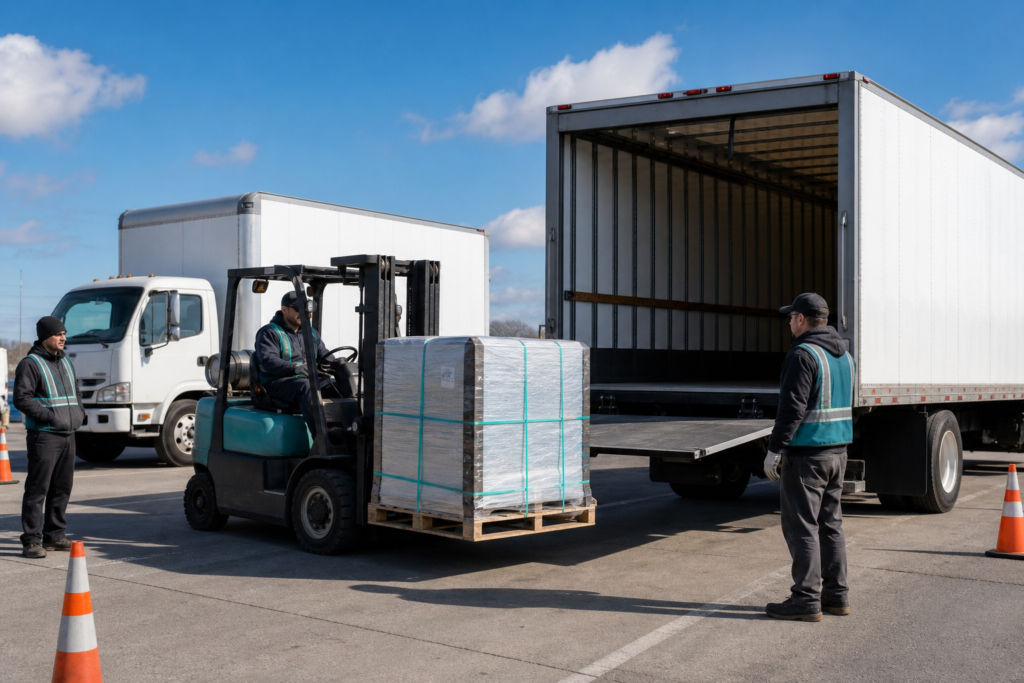
When your freight absolutely cannot wait and standard carriers either can't handle it or can't get it there fast enough, critical shipment rescue services step in. Think of them as the emergency room of logistics: they exist for the moments when a missed delivery means a halted production line, a blown trade show deadline or a grounded aircraft. If you've ever had a shipment fall through at the last minute, you already know why these services exist. The key differentiators are speed, specialized equipment, dedicated vehicles and constant communication from pickup to delivery.
Authoritative Frameworks Referenced: The Association for Supply Chain Management's ABC's of Supply Chain Resilience framework highlights Agility, Balance and Culture as the three pillars for handling disruptions, which directly applies to how rescue shipping providers must adapt in real time. The Global Health Supply Chain's Emergency Supply Chain Playbook offers structured protocols for emergency logistics planning and execution. Business Continuity Planning frameworks for logistics operations also emphasize pre-event planning, stakeholder communication and recovery procedures as essential to keeping freight moving during crises.
What counts as a critical shipment needing rescue?
A critical shipment is any freight where a missed or delayed delivery creates serious financial, operational or reputational consequences. That's a broad definition on purpose. It covers everything from a replacement engine part that's grounding an aircraft to trade show exhibit materials that need to arrive before setup crews do. It also includes high-value equipment moves, date-and-time-specific deliveries and cargo that requires special handling like white-glove service or secured transport.
Here's the thing: it's not just about the cargo itself. It's about the situation. A pallet of standard industrial parts isn't normally urgent, but it becomes critical the moment a production line shuts down waiting for it. According to aggregated industry analysis, 42% of unplanned manufacturing downtime is caused by equipment failure requiring urgent parts replacement.³ That single statistic explains why so many rescue shipments involve replacement components that need to arrive yesterday.
If you're in aerospace, this might look like an AOG (aircraft on ground) scenario. If you're an event planner, it might mean your exhibit booth panels are sitting in the wrong city 48 hours before doors open. The common thread is that waiting for standard shipping simply isn't an option.
How fast can emergency freight services actually deliver?
Speed is the whole point, so let's put some numbers on it. According to industry analysis of standard shipping timelines, expedited freight typically delivers within one to three business days, compared to standard ground freight that can take up to ten business days.² That's a massive difference when every hour of delay costs real money.
The specific speed depends on what vehicle gets dispatched. Cargo vans and sprinter trucks can be rolling within hours of your call for smaller loads. Straight trucks handle mid-size freight. Full truckloads use exclusive-use vehicles, meaning your shipment is the only thing on that truck, with no cross-docking, no transfers and no stops that aren't yours. Hotshot services using smaller, faster vehicles can sometimes deliver same-day for regional moves.
That said, don't confuse fast with instant. Distance, cargo complexity, permit requirements for oversized loads and real-world factors like weather all affect timing. The best rescue providers give you an honest delivery window upfront and then keep you updated with real-time GPS tracking throughout transit. If you're comparing providers, ask specifically about their dispatch-to-pickup time, not just their transit estimate.
Is expedited freight worth the extra cost?
It depends entirely on what a delay costs you. Expedited freight can run three to five times higher than standard shipping rates.⁶ That sticker shock is real. But here's where the math gets interesting: independent analysis from Cobalt found that production downtime in automotive manufacturing alone averages $260,000 per hour.⁶ Even in less capital-intensive industries, unplanned downtime is rarely cheap.
Think of it this way. If you're shipping a $200 replacement part and the receiving facility won't lose any revenue from waiting a few extra days, paying $1,000 for expedited delivery makes no sense. But if that same $200 part is the reason a $50,000-per-hour production line is sitting idle, the expedited premium pays for itself within minutes of the line restarting.
If you're an operations manager running just-in-time manufacturing, the calculus almost always favors speed. If you're a trade show coordinator whose entire event presence depends on materials arriving by a specific date, the cost of failure isn't just financial, it's reputational. The key is being honest about what's actually at stake before you decide whether the premium is justified.
What types of specialized cargo do rescue services handle?
This is where rescue services really separate themselves from standard carriers. We're talking about freight that most logistics companies would rather not touch: oversized and overweight equipment requiring step-deck trailers, RGNs (removable gooseneck trailers), lowboys, Conestoga trailers or extendable flatbeds. High-value cargo needing secured, sealed vehicle transport with GPS monitoring. Trade show exhibits that require careful handling and precise delivery windows down to a specific hour.
One documented case study from Vector Global Logistics illustrates the complexity well. They managed a trade show logistics project involving oversized doors transported across two countries and three separate conferences, requiring seamless coordination at every stage.⁴ That kind of multi-stop, multi-venue, schedule-dependent freight is exactly what standard carriers aren't built for.
If you're in industries like aerospace, manufacturing, energy, mining or construction, your freight often doesn't fit neatly into standard trailer dimensions or handling protocols. Specialized rescue providers maintain relationships with carriers who operate the right equipment and know how to secure difficult loads properly. They also handle permit services for oversize and overweight moves, which can be a logistical headache on their own. The bottom line: if it's complicated, oversized, high-value or needs to arrive at an exact time, these are the services built for that freight.
What should I have ready before calling for emergency freight?
When you're in a freight emergency, every minute you spend gathering information after making the call is a minute your shipment isn't moving. So get your details organized first. You'll want the exact pickup and delivery addresses, the cargo dimensions and weight, any special handling requirements like temperature sensitivity or fragile contents and your hard delivery deadline.
Beyond the basics, know your cargo's value for insurance purposes and whether the shipment requires any permits. If you're dealing with oversized or overweight freight, measurements need to be precise because they determine which type of trailer gets dispatched. For trade show deliveries, have your booth number, marshalling yard details and any venue-specific delivery windows ready.
Here's a practical tip: if you're in an industry where emergency shipments happen more than once or twice a year, build a standing relationship with your rescue provider before the next crisis hits. Leading logistics operations use what the Association for Supply Chain Management calls supply chain agility, the ability to adapt to change quickly. That agility starts with having your emergency contacts, standard shipment profiles and communication protocols already established so you can go from crisis to dispatched truck in the shortest time possible.
How do I verify a provider can actually handle my urgent shipment?
This is a smart question to ask before you're in a panic. Anyone can promise fast delivery on a website. The real test is whether they have the capacity, equipment network and communication infrastructure to back it up right now, not just in theory.
Start by asking about their dispatch availability. Genuine rescue freight providers operate 24/7/365, not just during business hours. Ask how quickly they can have a vehicle at your pickup location. Then dig into specifics: what vehicle types do they have access to? Do they handle exclusive-use vehicles where your freight is the only cargo on the truck? Can they provide real-time GPS tracking so you're not left wondering where your shipment is?
According to analysis of logistics industry standards, leading providers target on-time delivery rates above 95% for premium services.⁵ Ask prospective providers for their OTD metrics. If they can't give you a number or dodge the question, that tells you something. Also ask what happens if they miss your delivery window. Reliable providers have contingency protocols and proactive communication, meaning they'll call you before you have to call them if something changes. If you're evaluating multiple options, the provider who asks you the most detailed questions about your shipment is usually the one best equipped to handle it.
When might emergency freight services not be worth it?
Balanced decision-making means acknowledging that expedited rescue shipping isn't always the right call. There are several scenarios where the premium doesn't pencil out. If you're shipping low-value items where the downtime cost is minimal, paying three to five times the standard rate doesn't make financial sense.⁶ Similarly, if the receiving facility can't actually process or install the delivery immediately, you've paid for speed that doesn't translate into recovered time.
There's also a harder truth about major supply chain disruptions. During the 2021 to 2023 global shipping crisis, average U.S. import shipping delays increased by 21 days from 2018 levels, and even premium expedited services experienced significant delays. When ports are congested, regulatory hurdles pile up or capacity is constrained across the entire industry, no amount of premium pricing guarantees the timeline you need.
It's also worth noting that market projections for emergency logistics, like the Spherical Insights forecast of the emergency and disaster response market growing from $164.70 billion in 2023 to $322.70 billion by 2033 at a 6.96% compound annual growth rate, are modeled on historical trends.¹ They don't fully account for how advances in predictive maintenance and supply chain technology could reduce the need for emergency shipments over time. If you're investing in better forecasting and inventory planning, you may find yourself needing rescue services less often, which is actually the ideal outcome.
Key Takeaways
- Expedited freight delivers in one to three days versus ten for standard ground shipping.
- Equipment failure causes 42% of unplanned manufacturing downtime.
- Rescue freight costs three to five times more but prevents far costlier downtime.
- Exclusive-use vehicles eliminate cross-docking, transfers and unnecessary delays.
- Real-time GPS tracking and 24/7 communication are non-negotiable for critical shipments.
About This Topic
Critical shipment rescue services are specialized expedited logistics solutions designed for freight that standard carriers cannot accommodate due to time sensitivity, non-standard dimensions, high value or complex handling requirements. These services operate 24/7/365 using exclusive-use vehicles, real-time GPS tracking and dedicated communication to move urgent cargo within one to three business days. Common use cases include manufacturing line-down emergencies, trade show and event logistics, aerospace AOG parts, oversized equipment transport and any scenario where a missed delivery creates significant financial or operational consequences. While the cost premium runs three to five times higher than standard shipping, it is frequently justified by the far greater cost of production downtime, missed deadlines or operational disruption.
Comparative Analysis Table
| Factor | Option A | Option B | Notes |
|---|---|---|---|
| Delivery Speed | Standard Ground Freight: Up to 10 business days | Expedited Rescue Services: 1 to 3 business days, same-day possible | Choose expedited when downtime costs exceed the shipping premium |
| Vehicle Dedication | Standard Carriers: Shared trailers with multiple stops and cross-docking | Rescue Services: Exclusive-use vehicles, one shipment per truck, no transfers | EUV is critical for high-value, fragile, or time-exact deliveries |
| Tracking and Communication | Standard Carriers: Periodic updates, often only at major checkpoints | Rescue Services: Real-time GPS tracking with proactive status communication | Real-time visibility matters most when downstream operations depend on arrival time |
| Cargo Flexibility | Standard Carriers: Standard palletized freight within common dimensions | Rescue Services: Oversized, overweight, high-value, and non-standard freight with specialized equipment | Specialized trailers like RGNs, step-decks, and Conestogas are typically only available through rescue providers |
| Cost | Standard Carriers: Base market rates | Rescue Services: 3 to 5 times standard rates | Premium is justified when prevented downtime costs far exceed the shipping expense |
| Schedule Flexibility | Standard Carriers: Fixed schedules with limited accommodation for changes | Rescue Services: 24/7/365 dispatch with ability to adapt to schedule changes mid-transit | Essential for trade shows, events, and just-in-time manufacturing environments |
How to Implement
-
Assess the True Cost of Delay
Calculate your hourly downtime cost or the financial impact of a missed deadline before deciding whether expedited freight is warranted. Compare that number against the expected shipping premium to confirm the ROI makes sense.
-
Gather All Shipment Details Before You Call
Collect exact dimensions, weight, pickup and delivery addresses, special handling needs and your hard delivery deadline. For trade shows, include booth numbers, marshalling yard details and venue delivery windows.
-
Contact a Rescue Freight Provider With 24/7 Dispatch
Call a provider that operates around the clock and can dispatch immediately. Explain your situation clearly and ask for a realistic delivery window, not just the fastest possible estimate.
-
Confirm Vehicle Type and Tracking Capabilities
Make sure the dispatched vehicle matches your cargo requirements. Confirm that real-time GPS tracking will be active and that you'll receive proactive communication updates throughout transit.
-
Prepare the Receiving Location for Immediate Processing
Alert your receiving team about the incoming delivery, including the expected arrival window and any equipment they'll need for unloading. The speed advantage is wasted if the cargo sits on a dock waiting to be processed.
-
Build a Standing Emergency Logistics Relationship
After the crisis is resolved, establish a partnership with your rescue provider so future emergencies move faster. Pre-register your common shipment profiles, preferred communication contacts and standard delivery locations.
Troubleshooting FAQs
What if my emergency shipment gets delayed mid-transit?
Reputable rescue freight providers use real-time GPS tracking and proactive communication, so you should hear about potential delays before they become full-blown problems. If a delay occurs due to weather, road closures or mechanical issues, the provider should immediately present alternative options such as rerouting, dispatching a backup vehicle or adjusting the delivery window. The key is choosing a provider who calls you first rather than waiting for you to discover the problem.
How do I handle a rescue shipment that requires permits for oversized cargo?
Permit requirements for oversize and overweight freight vary by state and can add time to your dispatch window. Experienced rescue providers handle permit services as part of their coordination, but you need to provide accurate dimensions and weight upfront. If your cargo requires route surveys or escort vehicles, factor that into your timeline expectations. Being transparent about your freight's exact specifications from the first phone call prevents costly surprises mid-transit.
Implementation Stories
Best Practices Checklist
- Maintain an updated emergency contact list with at least one rescue freight provider you've already vetted and pre-registered with.
- Document your most common emergency shipment profiles, including dimensions, weights and typical pickup locations, so dispatch can happen faster.
- Always confirm real-time GPS tracking and proactive communication protocols before authorizing any rescue shipment.
- Calculate your facility's hourly downtime cost in advance so you can make instant go or no-go decisions on expedited freight premiums.
- Require exclusive-use vehicles for high-value, fragile or time-exact deliveries to eliminate transfer and cross-docking risks.
- Debrief after every emergency shipment to identify whether better forecasting or inventory planning could have prevented the crisis.
Glossary
| Term | Definition |
|---|---|
| Exclusive-Use Vehicle (EUV) | A truck or van dedicated entirely to your single shipment, with no other cargo on board, no stops for other deliveries, and no cross-docking or transfers during transit. |
| Hotshot | A fast, often smaller-vehicle expedited delivery, typically using cargo vans, sprinter vans, or small flatbed trucks for time-critical loads that don't require a full-size trailer. |
| AOG (Aircraft on Ground) | An aviation industry term for a situation where an aircraft is grounded and cannot fly until a specific replacement part or repair is completed, making parts delivery extremely time-sensitive. |
| On-Time Delivery Rate (OTD) | A logistics performance metric calculated as the number of on-time deliveries divided by total deliveries, multiplied by 100. Leading providers target rates above 95% for premium services. |
| Marshalling Yard | A designated staging area near a trade show venue or event site where freight is checked in, organized, and scheduled for delivery to the final booth or exhibit location. |
References
- Spherical Insights. "Emergency and Disaster Response Market Size, Growths To 2033". Spherical Insights. July 15, 2024. https://www.sphericalinsights.com/our-insights/emergency-and-disaster-response-market.
- Cogistics Transportation. "Expedited Freight in 2025: What Should Shippers Expect?". Cogistics Transportation. November 15, 2024. https://www.cogisticstransportation.com/expedited-freight-in-2025-what-should-shippers-expect/.
- ARDA. "The Alarming Costs of Downtime: How Lost Production Time Threatens Your Bottom Line in 2025". ARDA. March 10, 2025. https://www.arda.cards/post/the-alarming-costs-of-downtime-how-lost-production-time-threatens-your-bottom-line-in-2025.
- Vector Global Logistics. "Case Study: A Hassle-Free Trade Show Experience Spanning One Exhibit, Two Countries, and Three Conferences". Vector Global Logistics. August 22, 2025. https://vectorgl.com/case-study-a-hassle-free-trade-show-experience-spanning-one-exhibit-two-countries-and-three-conferences/.
- SourceDay. "On-Time Delivery Metrics". SourceDay. November 5, 2025. https://sourceday.com/blog/on-time-delivery-metrics/.
- Cobalt. "The Cost of Downtime in Production Lines". Cobalt. February 14, 2026. https://cobaltis.co.uk/2023/02/the-cost-of-downtime-in-production-lines/.
Need help planning a shipment?
Talk with PEI about expedited freight, specialized freight, or your next shipping challenge.
