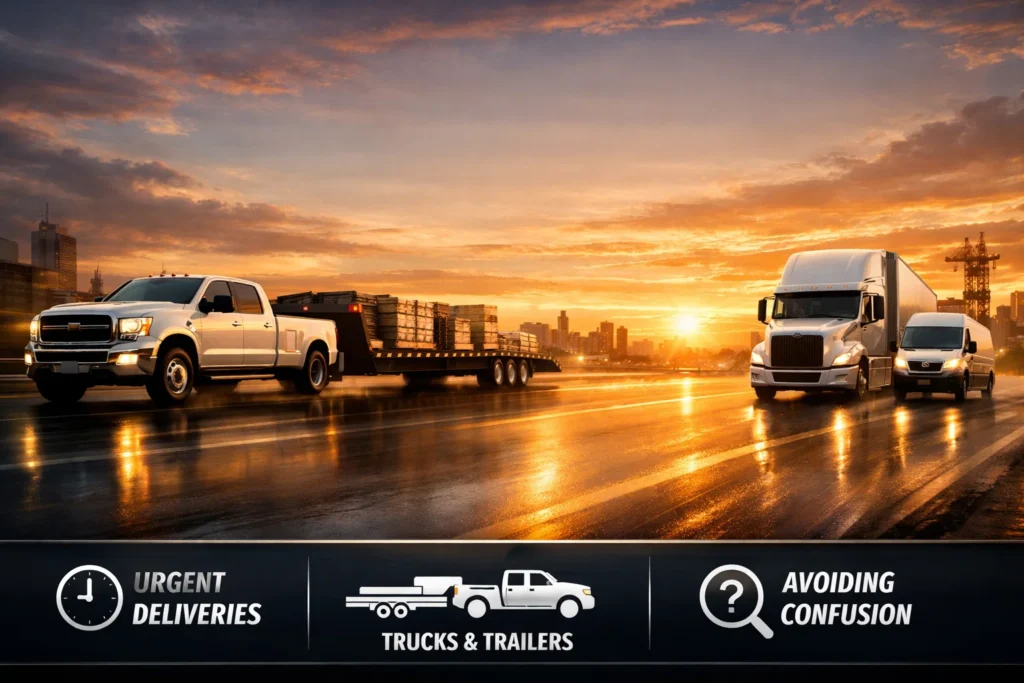
In the US freight world, the term “hot shot” is used a lot! Industry professionals and shippers themselves, all use the term, but not always in the same way. Some use the phrase to describe a small to medium sized, urgent load that is being hauled by a pickup truck and trailer. Whereas, others might use it to describe any fast moving or expedited shipment on any truck type necessary to hold the freight. So, because there are two different definitions for the same phrase being used interchangeably, this is where lines are blurred. But, it’s important to note that neither definition is right or wrong, and it’s a polysemous phrase, meaning it’s a phrase with multiple, related meanings.
But what happens when the term is misunderstood? You might think it’s a blip and doesn’t make much of a difference, but in many cases, you would be wrong. For shippers, this matters much more than you might think. It can lead to inaccurate quoting, service mismatches, and delivery delays. This is why, at the time of booking any load it is important to clarify the size, urgency and equipment requirements to be sure the right transportation solution is being utilized for your hot shot freight.
In this blog, we will cover what hot shot freight is, why there is such confusion around the term in the US, and what shippers should know before requesting this type of service.
What Is Hot Shot Freight? 🤔
First things first, let’s talk about what hot shot freight really is at its core. The broad concept is urgency, but as we’ve briefly mentioned the exact meaning changes depending on who is using the term.
A few things that both meanings of the phrase share are: that they both generally talk about an urgent, time-sensitive solution for freight that needs a quick pickup and delivery. They both involve a direct or dedicated transport, rather than a solution with multiple stops and handling points. And, they’re also both phrases used across similar industries, industries that use these services when they’re trying to minimize delays for high priority freight to avoid costly downtime. The most common sectors requiring a hot shot service by either way of the meanings are: construction, healthcare, manufacturing, agriculture, oil and gas, automotive, industrial supply and air.
When freight is needed at a job site, plant, facility or customer location as quickly as possible, a misinterpretation of a phrase about what service or equipment is actually being requested can create serious and expensive delays.
Why the Term “Hot Shot Freight” Causes Confusion in the USA 🤷♀️
The confusion around the term “hot shot freight” comes from the fact that it’s never had one fixed meaning. Instead, carriers, brokers, dispatchers, and shippers have used the phrase interchangeably over the years. This is how it has developed in the industry to have two different meanings, causing confusion in the US freight market.
Essentially, the main issue at hand is miscommunication. A shipper may request a hot shot service because they need an emergency delivery, but the carrier might interpret that as a request for a particular type of truck and trailer combo. But if the freight requires enclosed space, heavier capacity, or dock height access, then the mismatch will create problems from the get go. So, let’s take a closer look at the two different meanings that this one phrase is used for.
Meaning #1: Hot Shot Freight as a Truck and Trailer Type 🛻
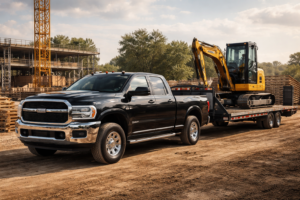
Hot shot trucking originated back in the 1970’s Texas oil industry. Independent pickup truck drivers would wait outside manufacturing facilities to immediately deliver critical oil drill parts to remote locations in the fields, when needed. It created a niche for fast, dedicated and specialized expedited transport. Hence, where meaning number one comes in.
This is why, many in the field know “hot shot freight” as referring to a specific type of hauling setup, rather than a broader service meaning. In this definition of the term, it’s usually describing a pickup truck paired with a flatbed, gooseneck, dovetail or similar trailer to move smaller to medium loads quickly. Most people when thinking of hot shot freight actually picture this equipment setup.
It’s a perfect solution to moving time-sensitive freight that does not need a full tractor trailer. Using medium duty pickup trucks of class 3-5, including vehicles like: Ford F-350/450 or RAM 3500/4500, this transportation option has the ability to turn around freight extremely quickly. These trucks are nimble, have better fuel efficiency and can be the most cost effective mode for your small/medium urgent loads. It’s ideal for building materials, machinery, palletized freight, and urgent freight that fits the space, where delays can turn costly.
While this solution is highly related to speed, just like the opposing way that the term “hot shot freight” is used, which we will cover in the next section. It only covers the needs of particular freight and it’s not a solution for all urgent loads. This is why it is super important to clarify your shipping needs from the outset and define what you mean when using the phrase. Covering all details of your load with a freight partner will find you the best solution for your freight movement.
Meaning #2: Hot Shot Freight as an Expedited Service 💨
In contrary, many use the phrase “hot shot” as a way of simply describing an urgent, expedited service. Someone may say they need a hot shot and that might not be them asking for the above specific truck and trailer type at all. The term could be used to emphasize the need of fast pickup, direct movement and delivery asap!
In this version of the term, it’s less about the vehicle type and more about the service level. Depending on the freight, this could mean asking for a cargo van, straight truck, pickup or even a tractor trailer when the size and weight call for it. Commonly the phrase is used in this way when shippers do not necessarily know all cargo vehicle options, and they’re focused more on the outcome, than the equipment specifics.
So while many define hot shot freight by equipment type, it’s also defined by and used to express urgency by some. This is exactly why there is regular confusion around the term.
Why This Difference Matters for Shippers 🤔
We’ve eluded to it earlier in this blog, but there’s a lot riding on getting a shipment booking right. If a “hot shot” booking is misunderstood, it can lead to problems before the freight is even on the road.
1. Inaccurate Quoting
When quoting freight movement, details are imperative to accurate pricing. If someone wants a “hot shot” quote, without specifying if they mean a pickup truck and trailer or expedited service, then a carrier or broker may build a quote based on the wrong assumptions. For example they might quote for a small open trailer, when the shipment needs enclosed space, liftgate service, or a larger truck. On the other hand, a shipment could be quoted on a larger than needed truck, on an expedited timeline, leading to higher rates for a vehicle that isn’t necessary. In both cases, unclear terminology can distort pricing and create frustration for those involved.
2. Service Mismatch
When a shipment is urgent, it doesn’t necessarily mean that hot shot equipment is the most appropriate solution, it really all depends on the load. So, this is where more confusion arises, if someone uses the term to describe urgent freight, but the shipper or broker uses it to describe vehicle type, then a pickup truck and trailer might be booked and the load could be too heavy, too large or need protection from the outside elements. In some situations a sprinter or cargo van might be the most suited to your freight, but a wrong booking can lead to delays while the appropriate truck is rebooked, extra handling touchpoints and unnecessary last minute stress, which could all be avoided if everyone is one the same page of the phrases meaning.
3. Operational Disruption
A delay caused by a mismatch in service or vehicle type that cannot accommodate your load can lead to serious operational delays and costs. For example, manufacturing plants waiting on machine components, or construction crews needing materials at a site, or a hospital waiting on a critical delivery might not have time for a second attempt. In urgent shipping, the cost of downtime often outweighs the freight cost itself.
4. Expectations
The term hot shot can create a false sense of certainty if meanings don’t align. A shipper might book a “hot shot” solution expecting immediate pick up and asap delivery. When the carrier or broker might hear “hot shot” as meaning a smaller dedicated vehicle and equipment. Defining the meaning, helps to set expectations time frames like same day vs. next day, services, etc.
What Shippers Should Clarify Before Requesting Hot Shot Freight 📝
To avoid confusion, it’s important that major details are clarified at the time of booking any shipping service. The more detailed you are with load descriptions and timelines, the easier it is for your shipping partner to avoid confusion and to match your load with the most appropriate service and equipment type.
Share the following details with your shipping partner:
- Weight
- Freight dimensions
- Number of pieces making up the shipment
- Detailed description of the type of freight
- Is the load palletized, crated, loose or machinery?
- Pickup deadline
- Delivery deadline
- Does the shipment need to move direct?
- Specific loading and unloading techniques
- Dock or ground load/unload requirements
- Does it need tarping or weather protection?
- Any special handling requirements
How a Reliable Expedited Carrier Helps Remove the Guesswork ✅
An industry professional would never work off assumptions in the first place. They would always interpret a shipment correctly from the beginning, clarifying industry terms along the way. Instead of taking the term at face value, they will ask the right questions, like confirming weight, dimensions, commodity, pickup requirements, delivery windows, and any special handling and requirements.
An experienced expedited freight partner, might also advise against what you think is the best option, by looking at factors that are frequently overlooked and suggesting alternatives to better suit your freight needs, that will help your bottom line and keep your freight on track.
To put it simply, a good freight partner will focus on the shipment itself, and translate urgency into practical shipping solutions to reduce costly mistakes and provide a reliable solution no matter what your needs are.
Conclusion 💭
In short, the term “hot shot freight” might mean different things to different people, but the end goal is always the same. To move critical freight quickly and without delay. So, by providing a detailed description of your freight, and having good, open communication with your freight partner can remove confusion altogether.
At PEI, we help customers navigate many freight complexities everyday, we have expertise in both meanings of the term “hot shot”. Both hot shot equipment specialists that could dispatch a truck within the hour and expedited shipment whizzes, who work on these types of shipments day in and day out. And we know the importance of matching your urgent freight with the right service and how crucial it is to keeping businesses on track. No matter what type of truck you need, or tight delivery timeline you might have, we can get the job done.
For friendly advice or for help with any of your hot shot freight, you can call us directly to speak with an expert agent at any time on: Phone: 888-SHIP-911 or if you would prefer, you can use the link below to get in touch. We’d love to help!😊
Need help with any of your hot shot shipments?
Today can be the day you stop struggling with your logistics problems.
At PEI we’re experts in dealing with specialized freight and can handle yours with any custom requirements.
Need help planning a shipment?
Talk with PEI about expedited freight, specialized freight, or your next shipping challenge.
