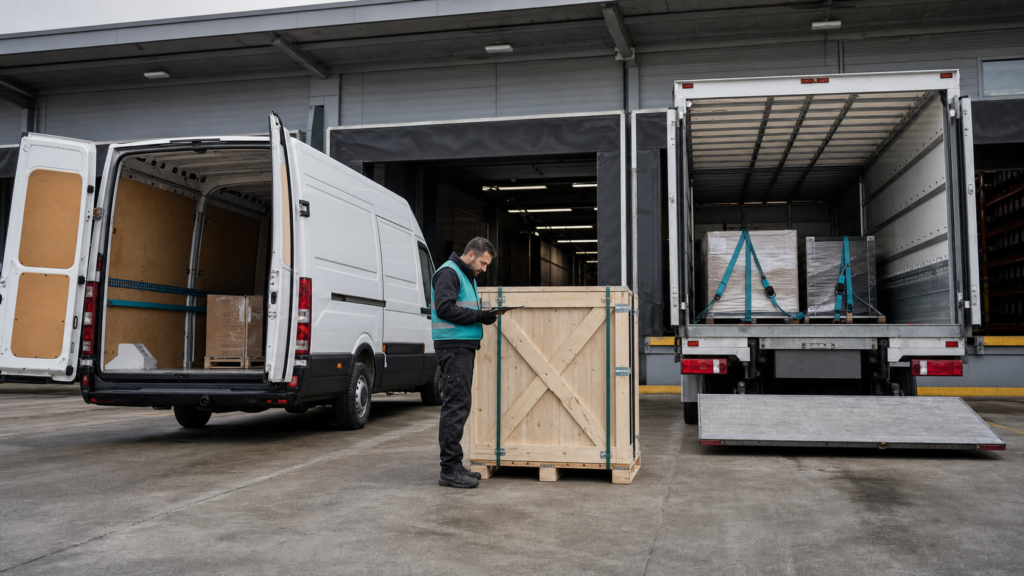
When a critical part fails or a shipment goes missing, emergency freight recovery is how you get things moving again fast. These services use dedicated trucks, real-time tracking and dispatchers who work around the clock to close the gap between where your freight is and where it needs to be. You're essentially paying a premium for speed and certainty, but when the alternative is a halted production line or a missed event deadline, that premium usually pays for itself many times over. The key is knowing which provider fits your specific situation, because not all emergency freight services are built the same way.
Authoritative Frameworks Referenced: The International Organization for Standardization's ISO 22301 standard for Business Continuity Management provides a recognized framework for building organizational resilience during disruptive events, including freight emergencies. The Association for Supply Chain Management's SCOR Digital Standard offers benchmarking metrics and best practices for optimizing supply chain processes, including emergency response protocols. Supply chain resilience metrics such as on-time delivery rate, damage-free delivery rate and expedited costs as a percentage of total logistics costs help companies measure the effectiveness of their emergency freight strategies.
What's the difference between expedited shipping and emergency freight?
Think of it this way: expedited shipping is planned speed, while emergency freight recovery is unplanned rescue. With expedited shipping, you know ahead of time that you need something faster than standard transit, so you book a priority service that typically delivers in one to three business days instead of the usual five to seven.¹ It's a proactive choice you make when ordering.
Emergency freight recovery kicks in when something has already gone wrong. Maybe a shipment was damaged in transit, a carrier missed a pickup or a critical part failed unexpectedly and you need a replacement yesterday. The provider dispatches immediately, often within hours, using whatever vehicle is right for the job, whether that's a cargo van, a sprinter truck, a straight truck or a full truckload. There's no waiting for the next scheduled route.
The real distinction comes down to response time and flexibility. Emergency providers operate 24/7/365 and build their entire operation around reacting fast to the unexpected. If you're dealing with a line-down situation at a manufacturing plant or a tradeshow booth that needs to be set up by tomorrow morning, that rapid-response capability is what separates emergency freight from simply paying for faster shipping.
How much does emergency freight cost compared to standard shipping?
There's no sugarcoating it: emergency freight costs significantly more than standard options. You might pay three to ten times the standard rate depending on distance, vehicle type and how urgently you need delivery. An exclusive-use vehicle, where your shipment is the only thing on that truck, commands the highest premium because there are no stops, no transfers and no cross-docking delays.
But here's where the math gets interesting. According to research published by IIoT World based on survey data from manufacturing companies, production downtime averages $260,000 per hour.² That means a single afternoon of waiting for a standard shipment could cost your operation more than a million dollars. When you compare that to even a steep emergency freight bill of several thousand dollars, the premium suddenly looks like a bargain.
That said, emergency freight isn't always the right call. If you're shipping low-value items and your operation has enough inventory buffer to absorb a few days of delay, the premium doesn't make financial sense. The decision really comes down to what that delay costs you versus what the emergency service costs. For high-value production environments, the answer is almost always to pay for speed.
What types of shipments need emergency freight recovery?
The most common scenario is a line-down situation in manufacturing. A critical machine component fails, and without a replacement, the entire production line sits idle. According to that same IIoT World research, 82% of companies have experienced unplanned downtime over the past three years,² so this isn't a rare occurrence. It's practically inevitable.
Beyond manufacturing, tradeshow and event logistics generate enormous demand for emergency freight. When a booth shipment gets delayed or a schedule changes at the last minute, you can't just push back the event date. The show opens when it opens, and your exhibit needs to be there, assembled and ready. Multi-booth shipments, marshalling yard coordination and direct-to-show deliveries all fall into this category.
If you're in aerospace, you've probably heard of AOG situations, which stands for aircraft on ground. When a plane can't fly because it needs a part, every hour on the tarmac costs a fortune. In one documented case, Aeronet Worldwide delivered a replacement dump valve for a Boeing SuperTanker from Arizona to Chile in three days during wildfire emergency response efforts, getting the aircraft back into firefighting operations.³ High-value equipment moves, special handling requirements and date-and-time-specific deliveries round out the list. Essentially, if the consequences of late delivery far exceed the cost of fast delivery, that's emergency freight territory.
How do I choose the right emergency freight provider?
Start by asking about response time, and don't accept vague answers. A good emergency freight provider should be able to give you a quote and dispatch a vehicle within hours, not days. Ask specifically how their dispatch process works after normal business hours, because emergencies don't wait for Monday morning. True 24/7/365 operations have dispatchers on call at all times.
Next, dig into their communication practices. When your shipment is en route at 2 AM and your plant manager is asking for updates, you need a provider that offers real-time tracking with GPS visibility and proactive status updates. The best providers don't wait for you to call them; they reach out with updates at key milestones. Ask about their process when something changes mid-transit, like a delivery appointment shifting or a new destination being added, because schedule flexibility is where many providers fall apart.
Finally, look for providers who want to build a partnership rather than just process a transaction. The ones who take time to understand your operation, your pain points and your typical emergency scenarios will respond faster and more effectively when the next crisis hits. If you're evaluating multiple providers, ask for references from companies in your industry and pay attention to how they handle the quoting process itself. Speed, clarity and honesty during the quote stage usually predict how they'll perform during the actual shipment.
Which industries use emergency freight services most often?
Manufacturing leads the pack by a wide margin, and the numbers explain why. Research from AIMMS analyzing cross-industry data from 2024 to 2025 found that supply chain disruptions cause companies to miss between 7.4% and 11.0% of potential revenue growth, with industrial equipment manufacturing experiencing the highest impact.⁴ When you combine that revenue risk with the $260,000-per-hour downtime figure, it's easy to see why manufacturers are the biggest customers for emergency freight.
Aerospace is another heavy user, particularly for AOG parts shipping. Engine moves, priority component replacements and high-stakes deliveries where aircraft are grounded create constant demand. The automotive sector follows a similar pattern, especially with just-in-time manufacturing models that leave almost no room for supply chain hiccups.
Tradeshow and event industries represent a different but equally urgent use case. Event planners, exhibit builders and companies participating in major trade shows rely on emergency freight when timelines compress or logistics plans fall apart. Construction, energy, mining and healthcare round out the top industries. If you're in any field where downtime or missed deadlines translate directly into significant financial losses, emergency freight services are likely already part of your contingency planning or they should be.
How fast can emergency freight actually deliver?
In many cases, same-day or next-day delivery is possible for regional distances. For longer hauls, one to three business days is typical for emergency freight, compared to five to seven business days for standard shipping covering similar distances.¹ The speed comes from three factors: immediate dispatch, exclusive-use vehicles that don't make intermediate stops and optimized direct routing.
The vehicle type matters a lot here. A cargo van or sprinter truck can be rolling within an hour or two of your call for smaller shipments. Straight trucks handle mid-size loads with the same urgency. For full truckloads, the dispatch window might be slightly longer, but you're still looking at dramatically faster transit than waiting for the next available slot on a standard carrier's schedule. The key phrase is "no transfers, no delays." Your freight goes on one truck and stays on that truck until it reaches your door.
The American Trucking Associations, using forecast models developed with S&P Global Market Intelligence, projects total truck tonnage will rise from 11.27 billion tons in 2024 to 13.99 billion tons by 2035,⁵ which means capacity on standard routes is only going to get tighter. That growing congestion makes dedicated emergency freight vehicles even more valuable, because they operate outside the constraints of shared carrier networks.
When might emergency freight not be worth the cost?
Emergency freight isn't a silver bullet, and there are real scenarios where the premium doesn't make sense. If you're shipping low-value items and your operation has robust inventory buffers for critical components, the cost of expedited service may actually exceed the cost of simply waiting. Not every delay triggers a catastrophic chain reaction, and it's important to be honest about which shipments truly qualify as emergencies.
There's also a scope limitation worth understanding. Emergency freight providers excel at rapid response for individual shipments, but they can't overcome systemic disruptions. During widespread events like major weather systems, port closures or geopolitical crises that affect entire transportation networks, even the best emergency providers face capacity constraints and extended lead times. The COVID-19 pandemic demonstrated this clearly, as documented by the National Science Foundation's research on business continuity management for supply chains facing catastrophic disruptions.
One more thing to consider: vendor studies on emergency freight ROI often represent best-case scenarios. For example, one major logistics company reported its customers achieved an average 107% three-year return on investment,⁶ but that figure comes from a company's own customer performance analysis and may not reflect average results across the broader market. Independent verification of ROI claims in the emergency freight sector remains limited, so approach dramatic savings figures with healthy skepticism and run your own numbers based on your specific downtime costs and shipment values.
Does using emergency freight hurt my regular carrier relationships?
This is a concern that comes up a lot, and the short answer is no, not if you handle it correctly. Emergency freight providers and standard carriers serve fundamentally different functions. Your regular carrier handles your predictable, planned volume. An emergency provider handles the exceptions, the surprises, the situations your standard carrier wasn't designed to accommodate.
Most standard carriers actually prefer not to handle emergency or non-standard shipments because those moves disrupt their optimized routing and scheduling. When you pull a last-minute request off your regular carrier's plate and hand it to a specialist, you're arguably doing your carrier relationship a favor. The key is being transparent about what you're doing and why.
If you're in a situation where you're using emergency freight frequently, that's actually a signal to examine your supply chain planning rather than a reflection of your carrier relationships. The goal should be using emergency services as a safety net, not a crutch. Building a partnership with an emergency freight provider who understands your operation means they can respond faster when real emergencies hit, while your standard carrier continues handling your day-to-day volume without disruption.
Key Takeaways
- Manufacturing downtime averages $260,000 per hour, dwarfing emergency freight premiums.
- Emergency freight delivers in one to three days versus five to seven for standard shipping.
- 82% of companies have experienced unplanned downtime in the past three years.
- Exclusive-use vehicles eliminate transfers, cross-docking and intermediate delays.
- Emergency freight ROI depends on comparing premium costs against actual downtime losses.
About This Topic
Emergency freight recovery services are specialized logistics solutions designed to move critical shipments as fast as possible when standard shipping timelines are unacceptable. These services use exclusive-use vehicles, immediate dispatch protocols and real-time tracking to deliver urgent freight in hours or days rather than the week or more that standard carriers typically require. Industries ranging from manufacturing and aerospace to tradeshow logistics and energy rely on emergency freight to prevent costly downtime, meet immovable deadlines and recover from supply chain disruptions. While premium-priced, these services often represent a tiny fraction of the financial losses they prevent.
Comparative Analysis Table
| Factor | Option A | Option B | Notes |
|---|---|---|---|
| Response Time | Standard Carrier: Next available scheduled pickup, typically 24 to 48 hours | Emergency Freight Provider: Dispatch within hours, often same day | Emergency providers are preferable when every hour of delay compounds financial losses |
| Vehicle Dedication | Standard Carrier: Shared trailer with multiple shipments and stops | Emergency Freight Provider: Exclusive-use vehicle carrying only your freight | Exclusive-use eliminates transfer risk and reduces damage potential for high-value items |
| Cost Structure | Standard Carrier: Lower per-shipment cost based on volume rates | Emergency Freight Provider: Premium pricing, three to ten times standard rates | Standard is better for planned shipments; emergency is cost-effective only when downtime costs exceed the premium |
| Communication and Tracking | Standard Carrier: Periodic updates, often self-service portal based | Emergency Freight Provider: Real-time GPS tracking with proactive live updates | Emergency providers offer higher-touch communication critical for stakeholder reporting during crises |
| Schedule Flexibility | Standard Carrier: Fixed routes and pickup windows with limited changes | Emergency Freight Provider: Fully flexible routing that adapts to mid-transit changes | Emergency providers excel when delivery details shift after dispatch, common in tradeshow and event logistics |
| Availability | Standard Carrier: Business hours operations with limited weekend service | Emergency Freight Provider: 24/7/365 dispatch and driver availability | After-hours and holiday emergencies require providers with true round-the-clock operations |
How to Implement
-
Calculate Your True Downtime Cost
Start by figuring out what an hour of delay actually costs your operation. Include direct production losses, missed delivery penalties and downstream customer impact. This number is your benchmark for deciding whether emergency freight premiums are justified.
-
Identify Your Most Vulnerable Shipment Types
Map out which parts, materials or shipments would cause the most damage if delayed. Focus on single-source components, items with long lead times and anything tied to a fixed event date like a tradeshow or installation deadline.
-
Vet Emergency Freight Providers Before You Need Them
Build relationships with one or two emergency freight providers now, not during a crisis. Ask about their dispatch speed, vehicle fleet options, communication protocols and experience with your industry. Request references and test their response time with a quote request.
-
Establish Clear Escalation Triggers
Define specific conditions that warrant activating emergency freight, such as a production line stoppage, a missed carrier pickup within a certain window of a deadline or a shipment damage report. Having pre-set triggers prevents costly hesitation during actual emergencies.
-
Document and Review Every Emergency Shipment
After each emergency freight event, record the root cause, the cost and the outcome. Review these quarterly to identify patterns. If the same part or route keeps triggering emergencies, that's a supply chain planning issue worth fixing at the source.
Troubleshooting FAQs
My emergency freight provider quoted a price but then increased it after dispatch. What should I do?
Price changes after dispatch usually indicate a provider who didn't fully assess the job upfront. In the moment, document everything and get the revised quote in writing before authorizing additional charges. Going forward, work with providers who are transparent about potential cost variables during the initial quote, including fuel surcharges, wait time fees and accessorial charges. A trustworthy provider gives you an honest quote upfront rather than surprising you later.
I need emergency freight but my shipment requires special handling. Can emergency providers accommodate that?
Most reputable emergency freight providers handle special requirements including white-glove delivery, liftgate service, inside placement and required communication at pickup or delivery. The key is communicating every detail during the quoting process, no matter how minor it seems. Mention temperature sensitivity, stacking restrictions, dimensions, weight and any required signatures or notifications. Providers who specialize in non-standard shipping are accustomed to these requests and will match the right vehicle and driver to your specific needs.
Implementation Stories
Best Practices Checklist
- Keep an updated contact list for at least two pre-vetted emergency freight providers with confirmed 24/7 dispatch capability.
- Maintain a spreadsheet of your most critical parts and components with supplier locations, weights, dimensions and handling requirements ready to share instantly.
- Set internal dollar-value thresholds that automatically authorize emergency freight spending without requiring multiple approval layers during a crisis.
- Require real-time GPS tracking and proactive status updates as non-negotiable terms in any emergency freight agreement.
- Conduct a quarterly review of all emergency freight events to identify recurring causes and address underlying supply chain vulnerabilities.
- Build partnerships with emergency freight providers during calm periods so they understand your operation before the next crisis hits.
Glossary
| Term | Definition |
|---|---|
| Exclusive-Use Vehicle (EUV) | A truck or van dedicated entirely to your single shipment with no other freight on board, ensuring direct routing with no stops, transfers, or cross-docking delays. |
| AOG (Aircraft on Ground) | An aerospace industry term for a situation where an aircraft cannot fly due to a missing or failed part, triggering urgent logistics to source and deliver the replacement as fast as possible. |
| Hotshot Delivery | An urgent, time-critical shipment typically handled by a smaller dedicated vehicle like a cargo van or sprinter truck, dispatched immediately for rapid point-to-point delivery. |
| Cross-Docking | A logistics practice where freight is unloaded from one vehicle and loaded onto another at a transfer facility. Emergency freight avoids this step to eliminate handling risk and save time. |
| Marshalling Yard | A designated staging area near a tradeshow or event venue where freight is received, organized, and scheduled for delivery to specific booths or exhibit spaces during assigned setup windows. |
References
- Cogistics Transportation. "Expedited Freight vs. Standard Shipping: Understanding the Cost vs. Speed Tradeoff". Cogistics Transportation. January 1, 2025. https://www.cogisticstransportation.com/expedited-freight-vs-standard-shipping-understanding-the-cost-vs-speed-tradeoff/.
- IIoT World. "The Actual Cost of Downtime in the Manufacturing Industry". IIoT World. January 1, 2025. https://www.iiot-world.com/predictive-analytics/predictive-maintenance/the-actual-cost-of-downtime-in-the-manufacturing-industry/.
- Aeronet Worldwide. "Case Study: Aircraft on Ground (AOG) Logistics". Aeronet Worldwide. May 22, 2026. https://www.aeronet.com/case-study-aircraft-on-ground-aog-logistics/.
- AIMMS. "How Costly are Supply Chain Disruptions and How to Mitigate Them?". AIMMS. January 1, 2025. https://www.aimms.com/story/supply-chain-disruption-costs/.
- American Trucking Associations. "Truck Freight to Bounce Back in 2025, ATA Projects". American Trucking Associations. January 1, 2024. https://www.trucking.org/news-insights/truck-freight-bounce-back-2025-ata-projects.
- Schneider National. "Schneider Logistics Customers Realize Incredible Savings Averaging 107% ROI". Schneider National, Inc. January 1, 2025. https://investors.schneider.com/news-events/financial-news/news-details/2025/Schneider-Logistics-customers-realize-incredible-savings-averaging-107-ROI/default.aspx.
Need help planning a shipment?
Talk with PEI about expedited freight, specialized freight, or your next shipping challenge.
