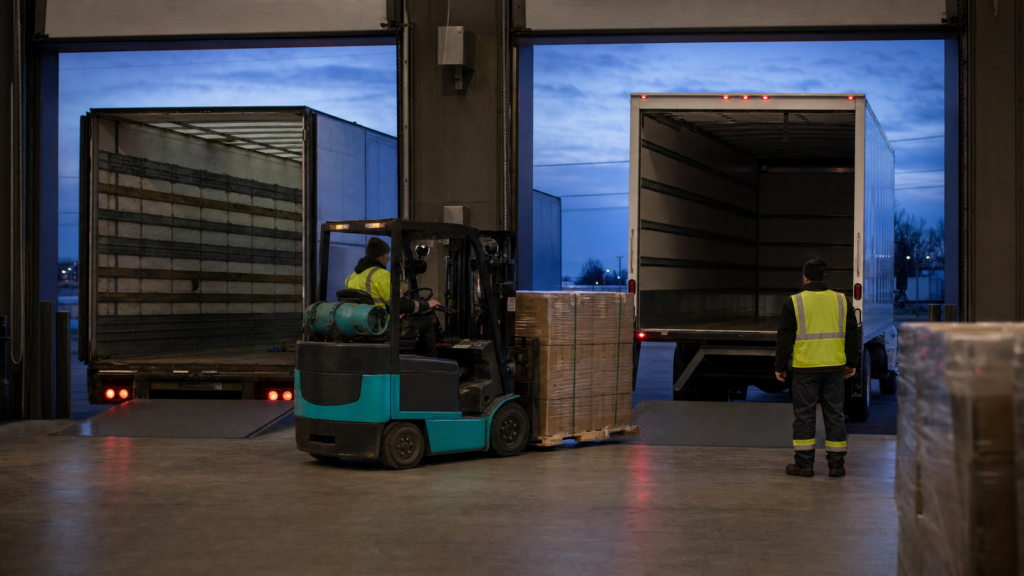
When a shipment fails mid-transit, whether from a carrier breakdown, a missed connection or a last-minute schedule change, you need a provider that can dispatch a dedicated vehicle within hours, not days. The best emergency freight recovery services combine rapid quoting, exclusive use vehicles that never cross-dock or transfer your cargo and constant communication from pickup through final delivery. Your ideal partner should operate 24/7/365 across multiple vehicle types, from cargo vans and sprinter trucks to straight trucks and full truckloads and should treat schedule flexibility as a core competency rather than an inconvenience.
Authoritative Frameworks Referenced: The International Organization for Standardization's ISO/TS 22318:2021 standard provides a formal framework for supply chain continuity management, including contingency logistics planning that directly addresses emergency freight scenarios. Business Continuity Management frameworks recommend a six-phase approach covering supply chain mapping, resilience strategies and recovery contingency planning. Additionally, multi-criteria decision-making models like the Fuzzy Analytic Hierarchy Process combined with TOPSIS offer structured methods for ranking and selecting third-party logistics providers based on weighted performance criteria.
How is emergency freight recovery different from expedited shipping?
Think of expedited shipping as something you plan ahead for. You know a shipment needs to arrive faster than standard transit, so you book a quicker service from the start. Emergency freight recovery is reactive. It kicks in after something has already gone wrong: a carrier broke down, a load was misrouted, a pickup was missed or a schedule changed at the last minute and now your entire logistics plan is upended.
The key difference is urgency and complexity. With expedited shipping, you're optimizing for speed on a known shipment. With emergency recovery, you're solving a problem under pressure, often needing a provider who can quote, dispatch and pick up within hours. That means exclusive use vehicles, meaning one shipment on one truck with no transfers, no cross-docking and no delays. It also means constant communication, because when your freight is in crisis mode, silence from your logistics partner isn't acceptable.
If you're in manufacturing and your line goes down waiting for parts, or you're an event planner watching your trade show booth sit in the wrong city two days before setup, the distinction becomes very real very fast. Emergency recovery providers specialize in exactly these high-stakes, time-compressed scenarios where standard carriers simply can't pivot quickly enough.
How much do supply chain disruptions actually cost businesses?
The numbers are sobering. According to an empirical review synthesizing multiple academic studies on firm-level disruption impacts, supply chain disruptions lead to an average 107% decline in operating income and 7% lower sales growth for affected companies.¹ That's not a typo. On average, a significant disruption can more than wipe out your entire operating income for the period.
Now, here's important context: those averages mask substantial variation across industries and disruption types.¹ A disruption hitting an automotive manufacturer with just-in-time inventory will look very different from one affecting a retailer with weeks of safety stock. But the directional message is clear. The cost of not having a rapid recovery option in place almost always dwarfs the cost of the recovery itself.
McKinsey's Supply Chain Risk Pulse 2025 survey reinforces this urgency, finding that companies are increasingly recognizing the need for contingency logistics as a core business capability rather than an afterthought.² When you weigh a few thousand dollars for an emergency shipment against hundreds of thousands in lost production or missed revenue, the math speaks for itself.
What scenarios most commonly require emergency freight recovery?
The most common trigger is downtime. A manufacturing plant's production line stops because a critical part is stuck somewhere in transit, and every hour of delay costs real money. This is especially acute in aerospace, where aircraft-on-ground situations demand rapid parts delivery to get planes back in service. When grounded isn't an option, you need a provider who can dispatch a hotshot vehicle immediately.
Trade shows and live events are another huge category. Picture this: your exhibit booth, worth tens of thousands of dollars, is supposed to arrive at a convention center for setup on Thursday morning. It's Wednesday afternoon and your carrier just informed you the load is sitting in a terminal 500 miles away. You need a dedicated truck dispatched within the hour, with real-time tracking and direct communication with the driver, to make your show-ready delivery window.
Other common scenarios include high-value moves that require special handling and sealed vehicle transport, schedule changes that cascade through an entire logistics chain and situations where the original carrier simply failed to perform. If you're in industries like manufacturing, energy, automotive or construction, the question isn't whether you'll face one of these emergencies. It's when.
How should you evaluate an emergency freight provider?
Start with response time and availability. If a provider can't answer the phone and provide a quote within minutes at 2 AM on a Saturday, they're not truly an emergency service. Look for 24/7/365 operations with fast quote and dispatch capabilities. The Carrier Quality Score Benchmarking framework recommends tracking delivery performance, cargo condition, on-time rates, incident frequency and communication responsiveness as core evaluation metrics.³
Here's the thing most people overlook: flexibility matters more than the cheapest rate. Your emergency provider needs to handle schedule changes without the whole process falling apart. They should offer multiple vehicle types, from cargo vans and sprinter trucks to straight trucks and full truckloads, so the right equipment matches your freight. And they should provide real-time GPS tracking, not just a tracking number you can check once a day.
One significant limitation to be aware of is that most expedited and emergency freight providers don't publish independent performance data, making direct comparisons difficult.⁴ That's why building a partnership with your provider before an emergency hits is so valuable. You learn their capabilities, they learn your freight profile and when the crisis comes, everyone already knows how to work together. Think of it as pre-positioning your logistics relationship the same way you'd pre-position inventory.
Where does emergency freight fit in a business continuity plan?
Emergency freight recovery isn't a standalone service. It's a critical component of your broader business continuity management strategy. The ISO/TS 22318:2021 standard for supply chain continuity management explicitly addresses the need for contingency logistics planning, recommending that organizations map their supply chains, identify single points of failure and pre-arrange recovery options before disruptions occur.⁵
In practice, this means identifying which shipments would cause the most damage if delayed, establishing relationships with emergency freight providers in advance and documenting your escalation procedures. If you're an operations manager, you should know exactly who to call, what information they need and what vehicle types are available before the crisis hits. According to business continuity management frameworks, this falls within the resilience strategy and recovery contingency planning phases of a six-phase BCM approach.⁶
The disaster relief logistics market exceeded $6.8 billion in 2023 and is projected to grow at 5.8% annually through 2032, reflecting the increasing recognition that rapid logistics response is essential infrastructure.⁷ While that figure primarily covers humanitarian and public-sector logistics, the commercial side is growing even faster as companies with lean inventories realize they need dedicated recovery capabilities built into their supply chain architecture.
What vehicle types are used for emergency freight recovery?
Vehicle flexibility is one of the biggest differentiators in emergency freight. The right provider should be able to match the vehicle to your specific load, not force your freight into whatever truck happens to be available. For smaller, ultra-urgent shipments, cargo vans and sprinter trucks offer the fastest dispatch and most agile routing. For larger loads, straight trucks and full truckloads provide the capacity you need with the dedicated, no-transfer service that emergency situations demand.
Specialized freight opens up even more options. If you're moving oversized industrial equipment, construction machinery or heavy manufacturing components, you might need step-deck trailers, RGN (removable gooseneck) trailers, lowboys, Conestogas or extendable trailers, along with permit services for overweight or oversized loads. The American Trucking Associations reports that trucks moved 72.7% of the nation's freight by weight in 2024, underscoring just how central the right truck selection is to any recovery operation.⁸
The common thread across all these vehicle types is exclusivity. In a true emergency, your freight should be the only freight on that vehicle. That means no transfers, no hub stops, no consolidation with other loads. One shipment, one truck, one mission. That's what separates emergency recovery from simply rebooking with another standard carrier.
When might emergency freight recovery not be worth the cost?
Let's be honest: emergency freight recovery is expensive, typically running two to five times the cost of standard shipping. And it's not always the right call. If your disrupted shipment isn't truly time-critical, meaning the delay won't cause production downtime, missed contractual deadlines or significant revenue loss, then paying premium rates for emergency service doesn't make financial sense. Sometimes rebooking through standard channels with a day or two of additional transit is the smarter move.
There are also important limitations in how we measure provider quality. Independent, standardized performance metrics for private emergency freight providers are largely unavailable, which makes vendor comparison genuinely difficult.⁴ A provider's marketing materials will always present their services in the most favorable light and you won't find published data on their failure rates or average response times the way you might for, say, public emergency medical services. This means you're relying heavily on relationship-based trust and your own experience.
Context dependency is another factor. A provider that excels at domestic ground freight within the continental United States might not be the right fit for international shipments or highly specialized cargo requiring specific certifications like hazmat.⁴ And quantitative disruption models, while useful for planning, rely on historical data and assumptions that may not capture the full complexity of your specific situation.⁴ Use them as decision aids, not gospel. The bottom line: emergency freight recovery delivers extraordinary value when the stakes justify the cost, but not every disrupted shipment qualifies as a genuine emergency.
How do you build a long-term emergency freight partnership?
The worst time to find an emergency freight provider is during an actual emergency. The best relationships are built before the crisis hits, through consistent communication, shared understanding of your freight profile and mutual trust developed over multiple shipments. When a provider already knows your typical load types, your critical lanes, your delivery requirements and your communication preferences, they can respond faster and more accurately when things go sideways.
This partnership approach also gives you leverage on flexibility. Schedule changes are one of the most disruptive forces in logistics because a single change can cascade through the entire process. A provider who understands your business can absorb those changes and adapt without starting from scratch every time. That kind of convenience, the ability to call one number and know the problem is being handled, is what separates a true logistics partner from a transactional vendor.
Think about it this way: you don't wait until your house is on fire to research fire departments. The same logic applies here. Build the relationship, test it with planned expedited shipments, evaluate their communication and responsiveness and then when the real emergency comes, you'll have a partner who already knows your business inside and out. That preparation is what turns a potential catastrophe into a manageable inconvenience.
Key Takeaways
- Supply chain disruptions average a 107% decline in operating income for affected firms.
- Emergency freight recovery typically costs far less than the downtime it prevents.
- Exclusive use vehicles with no transfers or cross-docking define true emergency service.
- Build your emergency freight partnership before the crisis, not during it.
- 24/7/365 availability with real-time tracking is non-negotiable for emergency logistics.
About This Topic
Emergency freight recovery services are specialized logistics solutions that activate when standard shipping fails mid-transit due to carrier breakdowns, misrouted loads, schedule changes or other disruptions. These services use dedicated, exclusive use vehicles dispatched on demand, often within hours, to recover and deliver time-critical shipments without transfers, cross-docking or delays. They serve industries including manufacturing, aerospace, trade shows and events, construction, energy and automotive, where downtime or missed deadlines carry significant financial consequences. The market for contingency and disaster logistics continues to grow as companies operating with lean inventories recognize the need for rapid-response freight capabilities integrated into their business continuity plans.
Comparative Analysis Table
| Factor | Option A | Option B | Notes |
|---|---|---|---|
| Response Time | Standard re-routing through LTL carrier: 24 to 72 hours to arrange, 3 to 5 days transit | Dedicated emergency freight provider: quote and dispatch within hours, same-day or next-day delivery | Emergency providers are essential when downtime costs exceed $10,000 per day |
| Cargo Handling | Standard carrier: multiple transfers, hub consolidation, cross-docking possible | Emergency recovery: exclusive use vehicle, no transfers, sealed direct transport | High-value or fragile freight benefits significantly from no-transfer service |
| Communication | Standard carrier: periodic tracking updates, business-hours customer service | Emergency provider: real-time GPS tracking, direct driver communication, 24/7 updates | Constant communication is critical during time-sensitive recovery scenarios |
| Cost | Standard re-routing: near-normal freight rates with possible delay penalties | Emergency recovery: 2x to 5x standard rates for dedicated, expedited service | Cost is justified when prevented losses exceed the premium by orders of magnitude |
| Flexibility | Standard carrier: fixed schedules, limited ability to accommodate changes mid-transit | Emergency provider: schedule-change adaptability, multiple vehicle types on demand | Providers with vehicle flexibility from cargo vans to full truckloads offer the most versatility |
| Relationship Model | Transactional: book per shipment, limited institutional knowledge of your freight | Partnership-based: pre-established understanding of your lanes, loads, and requirements | Partnership model dramatically reduces response time during actual emergencies |
How to Implement
-
Map Your Critical Shipment Vulnerabilities
Start by identifying which shipments in your supply chain would cause the most damage if disrupted. Focus on production-stopping components, event-deadline freight and high-value items that can't tolerate delays or mishandling.
-
Establish Provider Relationships Before Emergencies Hit
Reach out to emergency freight providers during calm periods. Share your typical freight profiles, critical lanes and communication preferences so they can pre-plan responses. Test them with a planned expedited shipment to evaluate their speed and communication quality.
-
Define Your Escalation Criteria and Procedures
Document exactly when a disrupted shipment qualifies for emergency recovery versus standard re-routing. Include cost thresholds, downtime calculations and the contact information for your pre-vetted emergency provider so any team member can initiate the process.
-
Require Real-Time Tracking and Direct Communication
Insist on GPS tracking and the ability to communicate directly with the driver or dispatcher throughout transit. During an emergency recovery, silence is your enemy. Make communication responsiveness a non-negotiable evaluation criterion.
-
Conduct Post-Recovery Reviews
After every emergency freight recovery, review what caused the disruption, how the provider performed and what could be improved in your contingency plan. Use these reviews to strengthen your business continuity framework and refine your provider relationships over time.
Troubleshooting FAQs
What if my emergency freight provider can't match the right vehicle to my load?
This is why vehicle flexibility matters so much when selecting a provider. If your current provider only offers full truckloads but you need a sprinter for a small, ultra-urgent aerospace part, you're stuck. The solution is to partner with a provider that maintains access to multiple vehicle types, from cargo vans to step-deck trailers and can match the right equipment to your specific load within hours. Ask about their fleet range during the vetting process, not during the emergency.
How do I justify the higher cost of emergency freight to my finance team?
Frame it as insurance math. Calculate your daily cost of downtime, whether that's lost production, contractual penalties or missed event deadlines. Then compare that figure to the emergency freight premium. In most cases, a single day of prevented downtime pays for the recovery shipment many times over. Present a concrete scenario: if your line goes down at $120,000 per day and the emergency recovery costs $5,000, the return is 24 to 1. Finance teams respond to numbers, so give them the numbers.
Implementation Stories
Best Practices Checklist
- Vet and establish relationships with at least one emergency freight provider before you need them.
- Document your critical shipment lanes and calculate the daily cost of disruption for each one.
- Require 24/7/365 availability, real-time GPS tracking and direct communication as baseline standards.
- Insist on exclusive use vehicles with no transfers, no cross-docking and no consolidation for emergency loads.
- Build emergency freight recovery into your formal business continuity plan with clear escalation triggers.
- Review every emergency recovery event afterward to identify root causes and improve your contingency procedures.
Glossary
| Term | Definition |
|---|---|
| Exclusive Use Vehicle (EUV) | A truck or van dedicated entirely to your single shipment, with no other freight on board, no stops at distribution hubs, and no transfers between vehicles. This ensures the fastest, most secure transit for time-critical or high-value cargo. |
| Hotshot | An urgent, time-critical shipment that requires immediate dispatch, typically using a smaller dedicated vehicle like a cargo van, sprinter, or straight truck for rapid point-to-point delivery. |
| Cross-Docking | A logistics practice where freight is unloaded from one vehicle and loaded onto another at a distribution hub, often adding hours or days of transit time. Emergency freight recovery specifically avoids cross-docking to eliminate delays. |
| Aircraft on Ground (AOG) | A term from the aerospace industry indicating an aircraft is grounded and unable to fly until a specific part or component is delivered. AOG shipments are among the highest-priority emergency freight scenarios. |
| Marshalling Yard | A designated staging area at a convention center or event venue where freight is received, organized, and queued for delivery to specific booth locations during trade show setup. |
References
- ChainLink Research (summarizing Hendricks & Singhal). "Analyzing the Effect of Supply Chain Disruptions on Operating Performance". ChainLink Research (summarizing Hendricks & Singhal). 2003. https://clresearch.com/articles/analyzing-the-effect-of-supply-chain-disruptions-on-operating-performance/.
- McKinsey & Company. "Supply Chain Risk Pulse 2025 Survey". McKinsey & Company. January 1, 2025. https://www.mckinsey.com/capabilities/operations/our-insights/supply-chain-risk-survey.
- Trax Technologies. "10 Critical KPIs for Carrier Scorecards: Improving Carrier Performance Rating". Trax Technologies. December 15, 2020. https://www.traxtech.com/blog/10-critical-kpis-for-carrier-scorecards.
- KSM Transport Advisors. "FreightMarks: A New Benchmarking Standard for the Trucking Industry". KSM Transport Advisors. February 26, 2025. https://www.ksmcpa.com/insights/freightmarks-a-new-benchmarking-standard-for-the-trucking-industry/.
- International Organization for Standardization. "ISO/TS 22318:2021 Supply Chain Continuity Management". International Organization for Standardization. January 1, 2021. https://www.iso.org/standard/79001.html.
- xMatters (Everbridge). "Six Stages of the Business Continuity Management Lifecycle". xMatters (Everbridge). November 26, 2024. https://www.xmatters.com/blog/six-stages-of-the-business-continuity-management-lifecycle.
- Global Market Insights Inc. "Disaster Relief Logistics Market Size, Share & Forecast – 2032". Global Market Insights Inc. August 2024. https://www.gminsights.com/industry-analysis/disaster-relief-logistics-market.
- American Trucking Associations. "U.S. Freight Movement Statistics 2024". American Trucking Associations. January 1, 2024. https://www.trucking.org/economics-and-industry-data.
Need help planning a shipment?
Talk with PEI about expedited freight, specialized freight, or your next shipping challenge.
